GEO agency in Montreal
GEO agency in Montreal: get cited by ChatGPT, Perplexity and Google
We help you show up where your customers are looking: Google, ChatGPT, Bing, Claude and Perplexity.
Get a first 100% free analysis of your website.
Be the source AI tools quote when your customers ask AI a question.
SEO Montreal™ measures your visibility in AI answers, makes your site readable, citable and verifiable for generative engines, then counts the citations and the customers they bring you every month, with Google Ads management included in the mandate.






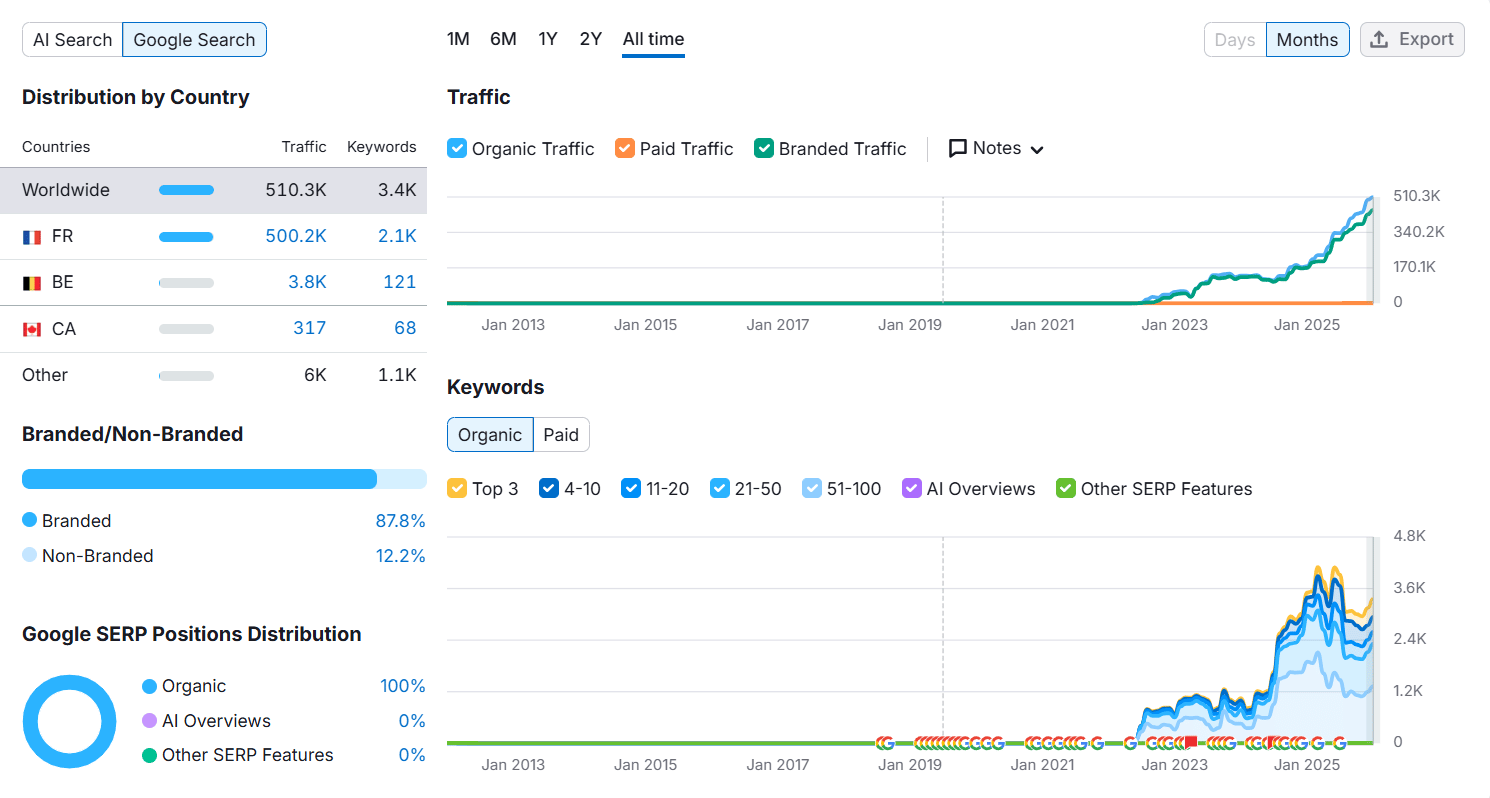
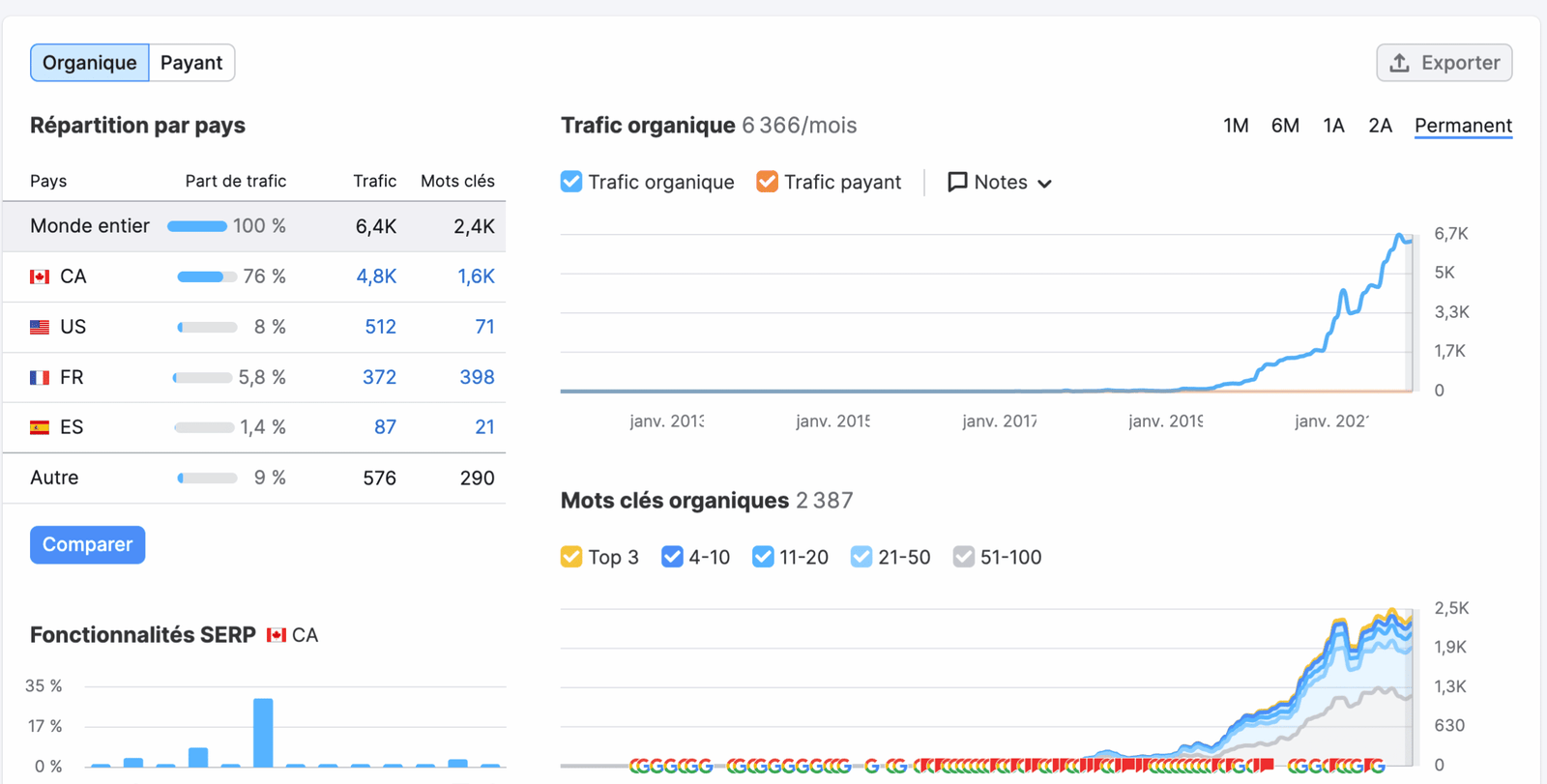
Our SEO case studies
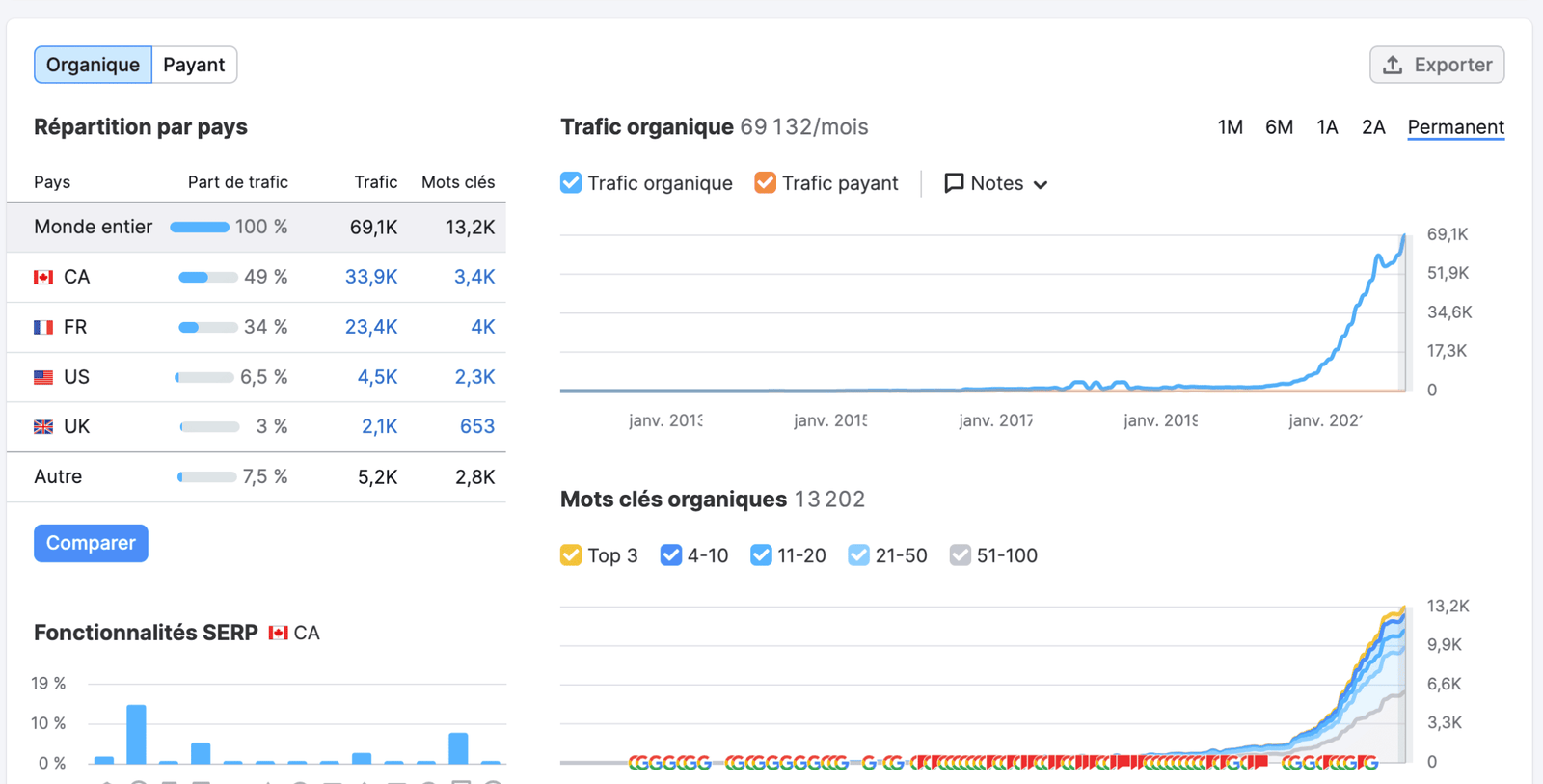
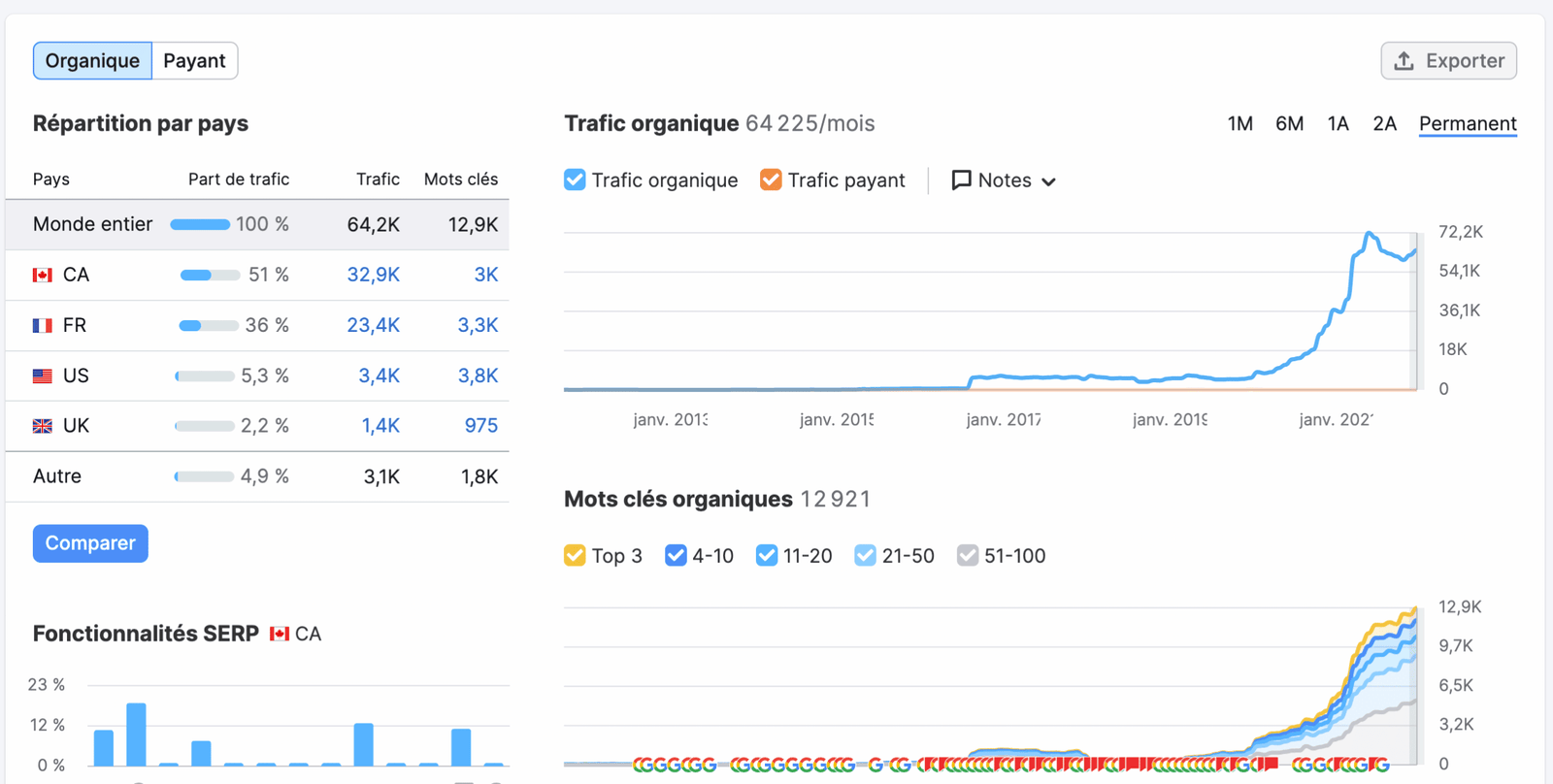
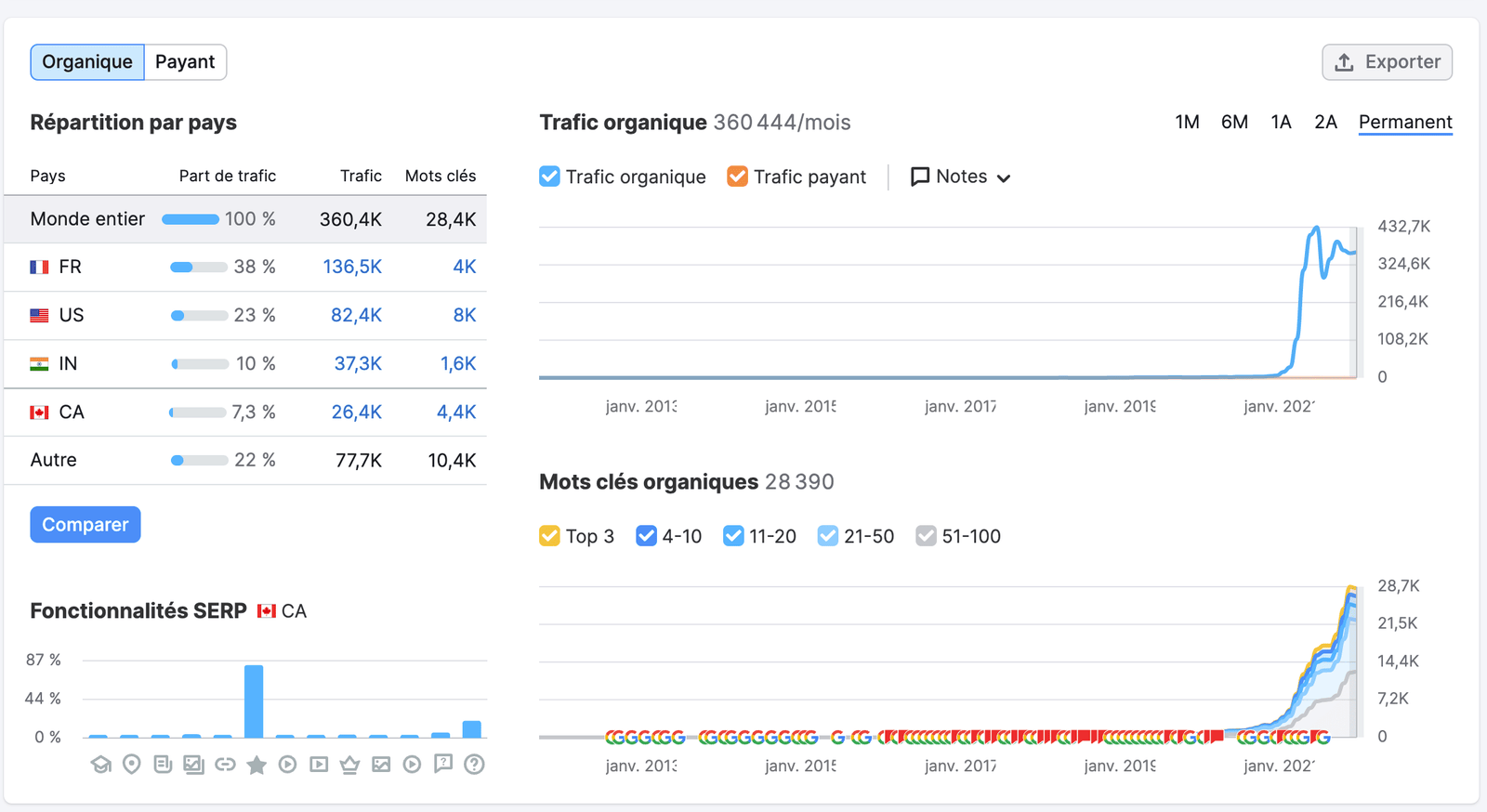
A few of the results produced for clients in organic search. Each mandate is detailed on our case studies page.
Our GEO and AI search services
Generative engine optimization (GEO) works on three surfaces: your site, as AI crawlers read it; your pages, as a language model breaks them into passages it can quote; and your brand, as third-party sources describe it. We work on all three.
GEO audit and prompt set
We start by asking generative engines the questions your customers ask them: ChatGPT, Perplexity, Google AI Overviews and AI Mode, Bing and Microsoft Copilot, Claude. For each prompt, we record who gets cited, which page is quoted and how it is phrased, then compare your share of voice with your competitors'. The GEO audit cross-checks those results with your Google Search Console to find the queries where impressions climb while clicks stay flat.
AI crawler access and machine readability
Each engine has its own crawler. Googlebot feeds AI Overviews, OAI-SearchBot feeds ChatGPT search, PerplexityBot feeds Perplexity's search results and Claude-SearchBot is used for Claude's search. We check that your robots.txt lets them in, that your key content exists as HTML text rather than client-side JavaScript (server-side rendering fixes that when needed) and that your Core Web Vitals hold. GPTBot, OpenAI's training crawler, is a separate setting: you can block it and still appear in ChatGPT search. Google states that you don't need new machine-readable files, AI text files or special markup to appear in its AI features: technical SEO foundations are what count.
Citable content and direct answers
A language model usually quotes a short, extractable passage that answers a precise question with a definition, a number or a verifiable step. We rewrite your service pages as direct answers: the definition of the service up front, subheadings phrased as your customers' questions, a clear semantic structure, an FAQ whose text matches its FAQPage markup word for word, and a named author to carry E-E-A-T signals (experience, expertise, authoritativeness and trustworthiness). Your original data, prices, timelines and real cases are what set your page apart from generic text, so we put them forward.
Structured data and entity consistency
Generative engines cross-check what your site says about you against your Google Business Profile, directory listings and social profiles. We align your name, address and phone number (NAP) everywhere, add schema.org markup in JSON-LD (Organization, Service, Person, FAQPage) that mirrors the visible text, and give your content an identified author. A consistent entity reduces hallucinations: a model has less reason to invent when the answer is written down plainly.
Brand coverage and external citations
Generative engines give more weight to brands described by several independent, trusted sources. We earn editorial mentions and backlinks in media, industry directories and trade publications, work on your Google reviews and monitor the third-party pages where your brand appears, forums and encyclopedias included (Reddit, Quora, Wikipedia). These are editorial practices: the same links support your organic rankings and your AI visibility.

Is your brand cited by AI tools?
Send us your website address: we test your main prompts in ChatGPT, Perplexity and Google AI Overviews and tell you where you stand, free of charge.
Everything about GEO and AI search
10 min read·By SEO Montreal™
What is generative engine optimization (GEO)?
Generative engine optimization (GEO) is the set of practices that make a business visible and cited in the answers of generative search engines: Google AI Overviews and AI Mode, ChatGPT, Perplexity, Microsoft Copilot, Gemini and Claude. It extends SEO: the same technical foundations and the same demand for useful content, plus work on machine readability, direct answers, structured data and the brand's coverage on third-party sources. Results are measured in citations, in share of voice against competitors on a set of prompts and, in the end, in customers.
Our GEO method in 5 steps
Understand, prioritize, execute, measure, optimize: the method behind our SEO mandates, applied to generative engines by our GEO specialists.
Understand: GEO audit and conversational queries
We analyze your Search Console and Analytics data, your site and the three competitors AI tools cite most in your market. You get a list of the prompts where you're missing, the quick wins for the first month and the pages that could answer each question.
Prioritize: the prompts that bring customers
Not every question has the same value. We rank conversational queries by commercial intent and by their search volume in Google, then pick the pages to rewrite first: the ones that sell.
Execute directly on your site
We make the changes ourselves, on WordPress, Shopify, Wix, Webflow or React: markup, heading structure, structured data, robots.txt, new service pages. Content goes through Google Docs for your approval before it goes live. You approve, we publish: the audit and its execution come from the same team.
Measure: citations, Search Console and customers
Every month, we run the same prompt set again and count the citations earned, engine by engine. We add the referral traffic from AI platforms in Google Analytics, then the impressions, clicks and click-through rate in Search Console, where Google includes traffic from its AI features: a query that turns zero-click shows up there. Reporting, as a Looker Studio dashboard or in a meeting, ends with the KPIs that matter: calls, leads, conversions and sales you can attribute.
Optimize, month after month
AI answers change with every model update. Once the first citations come in, we adjust the pages that lost one, cover the new questions that appear and refresh dated facts, because an up-to-date page is usually picked over a stale one. This monthly follow-up is part of the mandate, which renews month to month with no long-term contract.
GEO agency pricing
GEO is done inside our SEO mandates, and a GEO mandate usually runs between $2,000 and $3,000 per month; larger sites move to a custom mandate. The amount depends on the number of pages to rewrite, the competition on your prompts and the technical state of your site. Google Ads campaign management is included with no management fee. You can stop with 30 days' notice, and the work we've done stays yours. Details are on our SEO pricing page.
GEO and SEO: one foundation, two storefronts
SEO puts you in Google's ten blue links; GEO, also called AI SEO or AI search optimization, gets you cited in the AI Overview above them and in ChatGPT and Perplexity. Both rest on the same foundation: an indexable site, citable content that answers the question and a brand mentioned beyond its own website. Google's AI Overviews and AI Mode draw on Google's index, which gives a head start to a page that already ranks well.
Generative engine optimization adds work in two places: the answer engines with their own crawler and selection criteria, such as ChatGPT and Perplexity, and your brand's coverage off-site. Generative engines often split a question into sub-queries and fetch a passage for each one, so a page that answers one thing clearly is usually picked over a page that covers everything. You will also see the acronyms AEO (answer engine optimization) and AIO (AI optimization): they describe the same work under another name.
Which businesses need a GEO agency?
Three profiles get the most out of a GEO strategy: local businesses, where a few citations change the number of calls, markets where advertising is restricted, and companies that sell at a distance.
Local businesses and professional firms
When someone asks ChatGPT for an employment lawyer in their city or a dental clinic open on Saturdays, the answer names two or three businesses. We optimize your GEO so yours has a better chance of being one of them, as we already do in SEO for law firms, dental clinics, plastic surgeons and construction companies.
Regulated and hard-to-advertise markets
Cannabis, casino, adult content, health products: Google Ads and Meta refuse or restrict your ads, so organic traffic and AI citations become your main channels. We do GEO there as we do SEO, within each sector's compliance limits, for clients in Canada and internationally, from Montreal to Berlin and Dubai. See our work in cannabis SEO, casino SEO and adult SEO.
E-commerce, SaaS and B2B
Generative engines compare products, software and vendors from the listings and pages they can read. We structure your catalogs, feature pages and case studies so they are cited in those comparisons, in English and in French: see our work in e-commerce SEO, SaaS SEO and B2B SEO.
Why choose SEO Montreal as your GEO agency
SEO Montreal™ is a search agency that does SEO and GEO and nothing else, for more than 500 clients in over 25 industries. The agency was founded and is led by Raphaël Larouche; our GEO specialists make the changes on your site themselves and update you every month, in a written report or a meeting, whichever you prefer. The mandate is monthly, Google Ads management is included, and you stay because search produces value, not because a clause holds you in.
We would rather test than assume: every GEO recommendation is tested in ChatGPT, Perplexity and Google AI Overviews before it is rolled out across your pages. And when GEO is the wrong investment for your business, we tell you. Learn more about our team.
GEO agency FAQ
GEO is included in our SEO mandates, which usually run between $2,000 and $3,000 per month. The price depends on the number of pages to rework, the competition on your queries and the technical state of your site. The mandate renews month to month with 30 days' notice and includes Google Ads management.
It depends on where you start. A page that already ranks well in Google can appear in AI Overviews as soon as it answers the question better than the pages cited today, while brand coverage builds over several months. On the ChatGPT side, OpenAI states that a robots.txt change takes about 24 hours to be reflected, but the citation itself depends on your content and on the sources that talk about you. We give you a realistic timeline after the GEO audit.
Ask ChatGPT, Perplexity and Google the question a customer would ask, such as the best provider of your service in your city. Note who is cited and which page is quoted. In Search Console, compare impressions and clicks over twelve months: impressions rising while clicks stall often means a generated answer now sits above your link. Our free analysis runs this test for you.
The llms.txt file is a proposal for describing a site to language models. Today, Google states that you don't need AI text files or special markup to appear in its AI features, and the crawler documentation from OpenAI and Perplexity relies on the standard robots.txt. We can create one if you want it, but we treat it as an extra: crawler access, readable text and citable content carry more weight.
On three levels. Citations: every month, we run the same prompt set in ChatGPT, Perplexity, Google and Copilot and count the answers that cite you, with your share of voice against competitors. Traffic: visits referred by AI platforms in Google Analytics and impressions in Search Console, where Google includes its AI features. Business: the calls, inquiries and sales attributable to the mandate.
Yes. When someone asks ChatGPT or Gemini for a plumber, a dentist or a lawyer in their city, the answer names a few businesses and leans on reliable local sources: Google Business Profile, reviews, directories, service pages by city. A small business with a consistent entity and pages that answer clearly has a good chance of being named, with the budget of a focused mandate.
No. We start with the service pages that sell and match high-intent prompts, often five to ten pages. Each one gets a definition up front, subheadings phrased as questions, a marked-up FAQ and structured data aligned with the visible text. The other pages follow at the pace of the mandate, starting with those where Search Console already shows impressions.
Yes, that is called a hallucination: the model fills a gap with information that sounds plausible but is wrong, such as opening hours, a price or a service you no longer offer. The best protection is a consistent entity: the same information on your site, your Google Business Profile and your directories, up-to-date schema.org markup and pages that state clearly what you do. We also check what generative engines say about you in our monthly tests.
Let's talk about your AI visibility
30 minutes, no commitment, a reply within one business day.
Get a first 100% free analysis of your website.