E-commerce SEO agency
E-commerce SEO agency: organic growth for online stores
E-commerce SEO services for Shopify, WooCommerce, Magento and BigCommerce stores, from the product page to AI shopping answers.
Get a first 100% free analysis of your website.
SEO Montreal is an e-commerce SEO agency for online stores of every size: technical SEO for large catalogs, category and product pages built around search intent, product structured data, Merchant Center free listings and visibility in AI shopping answers.







E-commerce SEO case studies
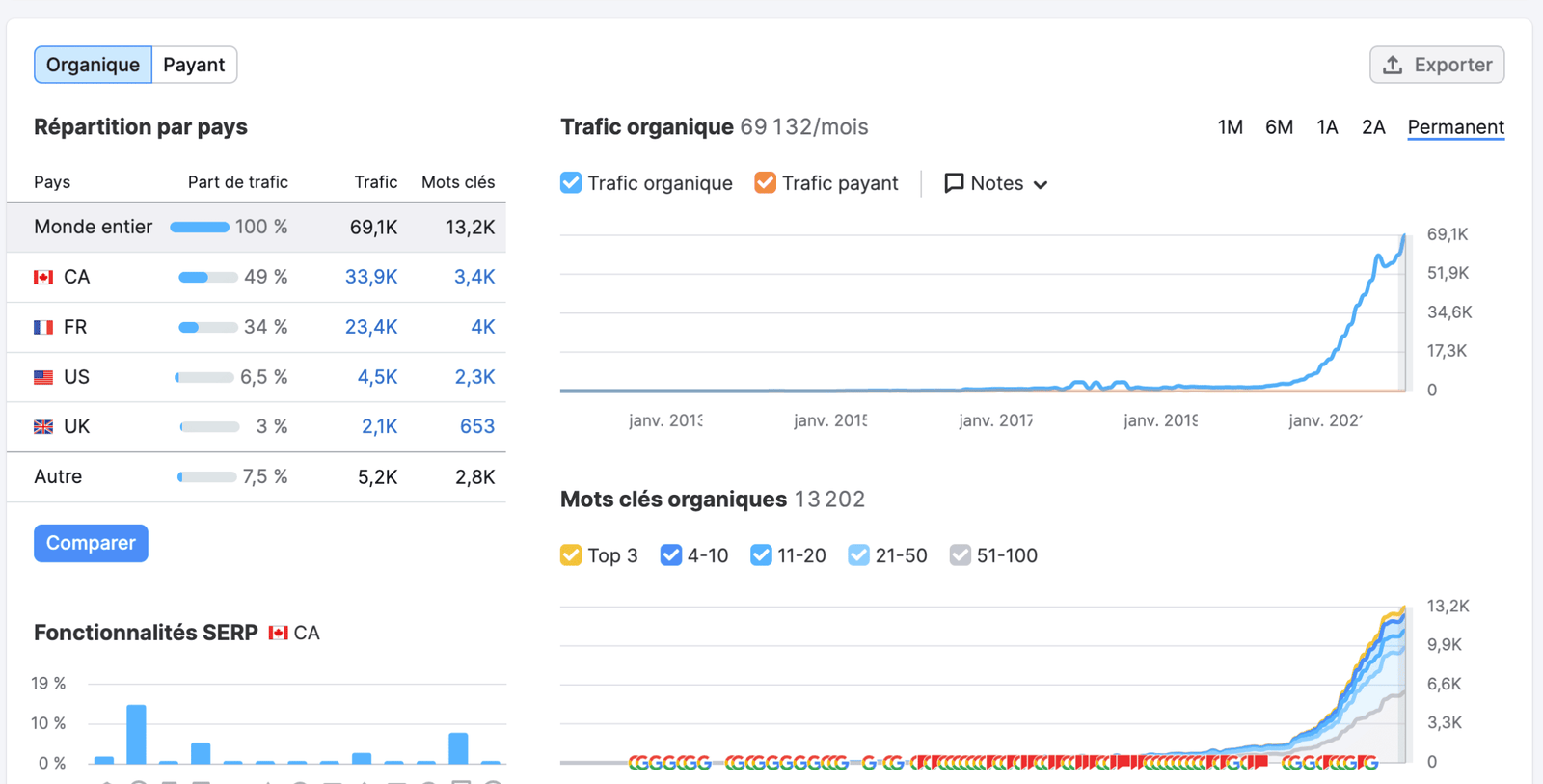
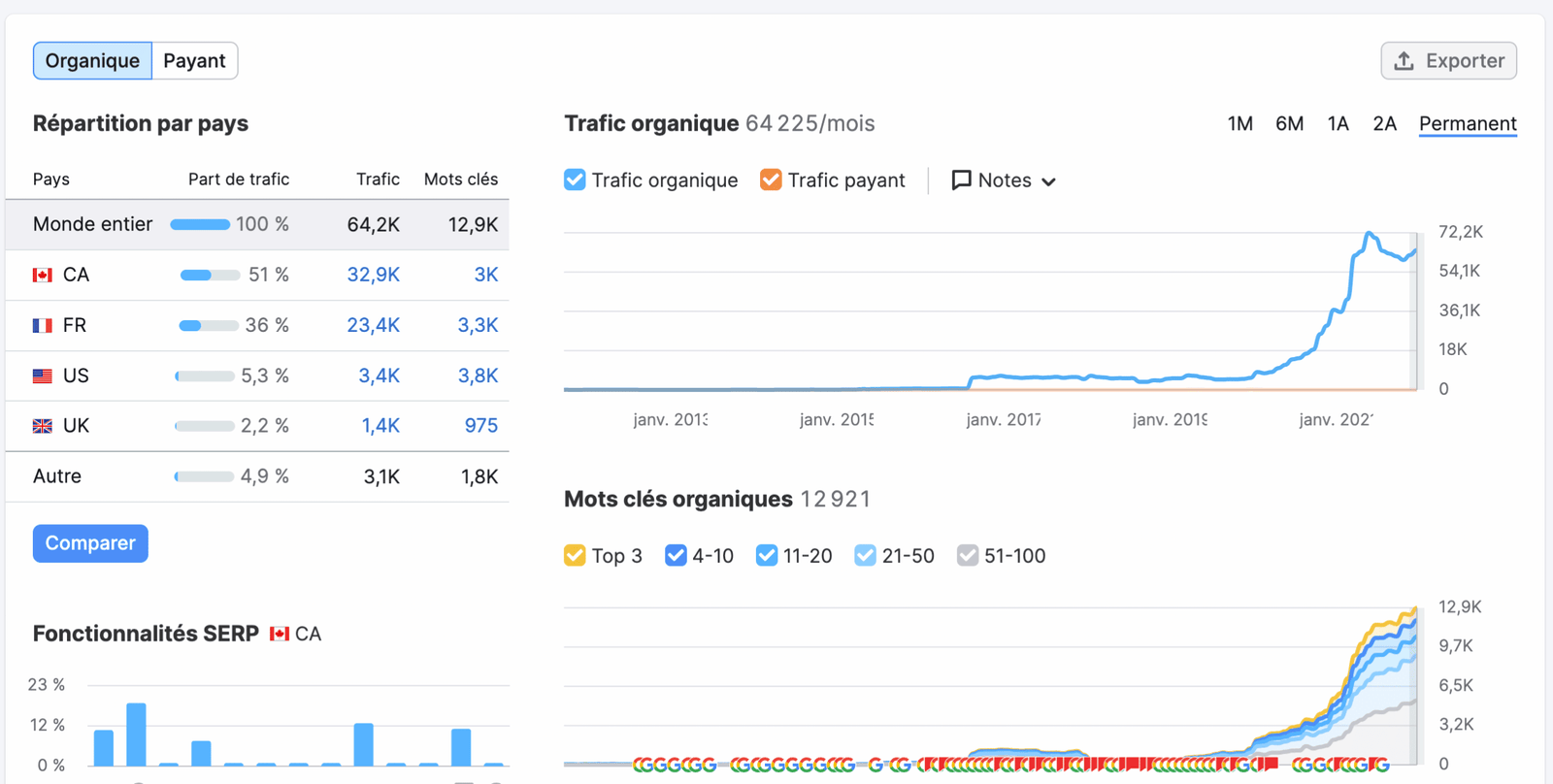
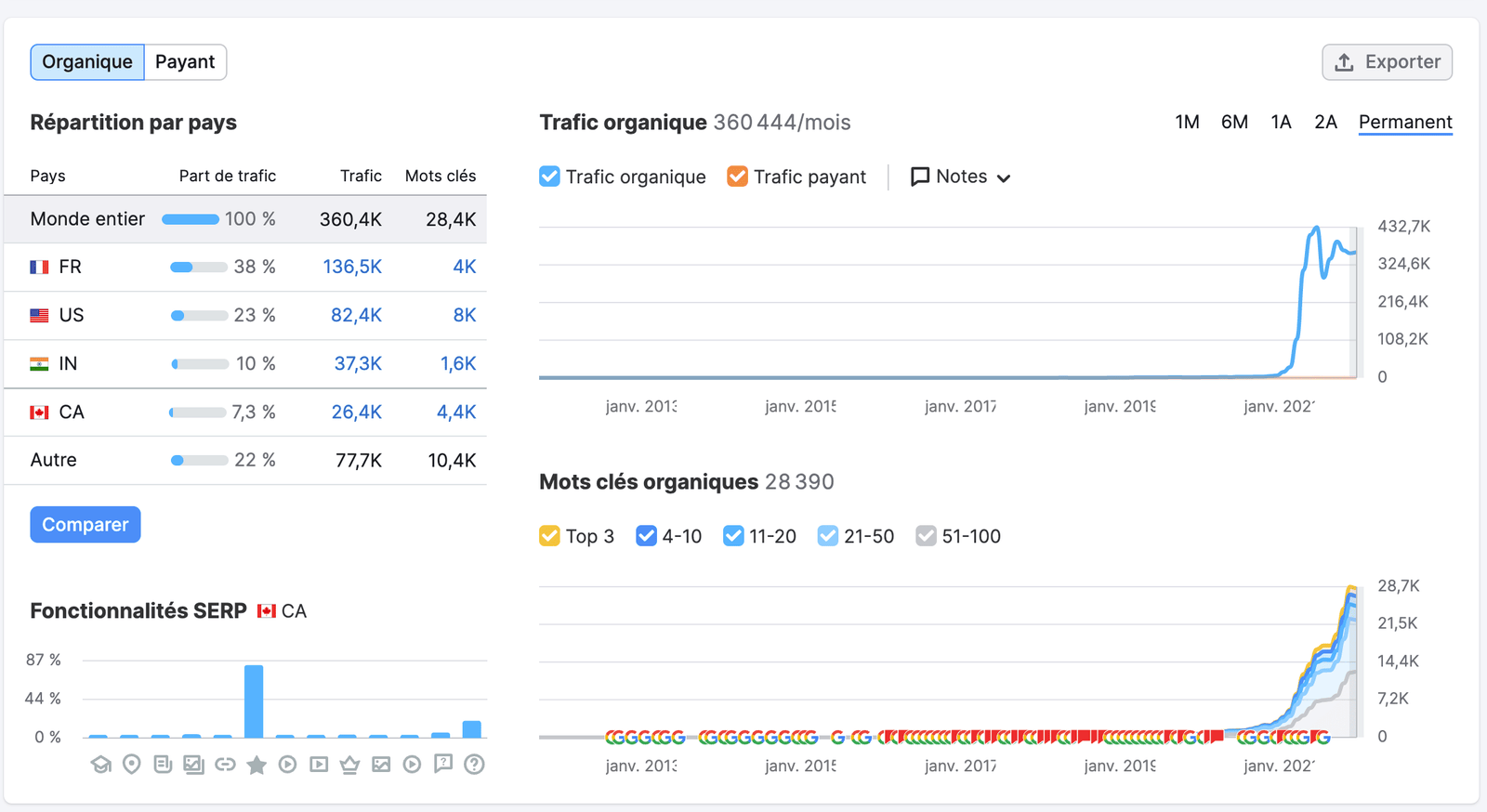
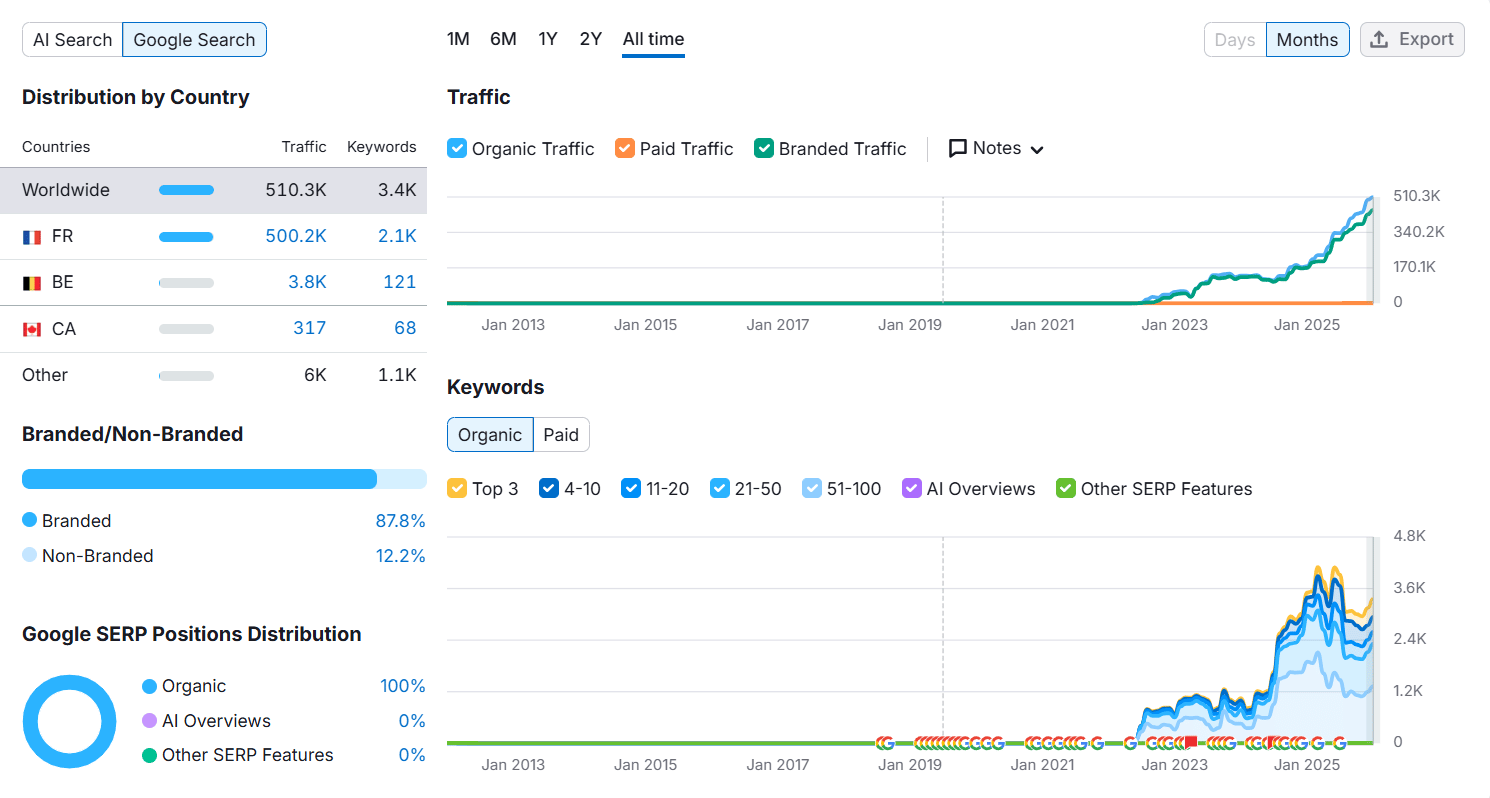
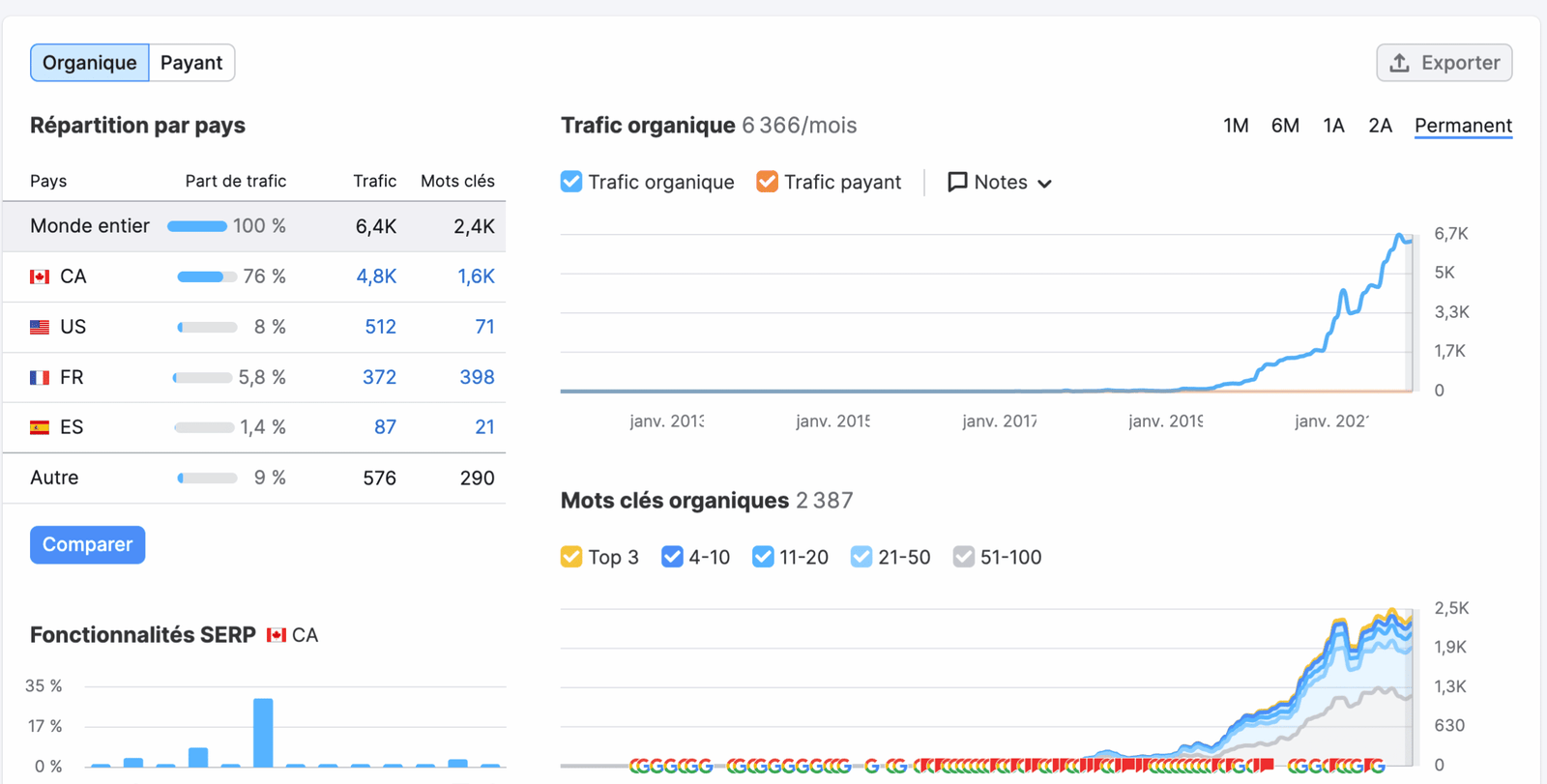
Our published case studies are anonymous. In e-commerce, they include an international e-commerce store at 63,200 visits per month, an e-commerce site at 360,400 visits per month and a clothing brand at 510,300 visits per month. The mechanics are the same from one store to the next: templates that deserve the index, category and product pages that match search intent, and clean product data.
Our e-commerce SEO services
Six areas of work, from crawl control on a large catalog to the product data that feeds Google’s shopping surfaces.
Technical SEO for large catalogs
We audit crawl paths, indexation and site architecture template by template, then decide which filtered URLs deserve the index. Filter combinations with real search demand become indexable landing pages; the rest are handled with canonical tags, robots.txt rules or URL fragments, the options Google documents for faceted navigation. Pagination, internal linking, breadcrumbs, redirects for discontinued SKUs and Core Web Vitals on mobile templates complete the technical work.
Category and product page optimization
Category pages usually carry the most valuable commercial keywords, so each category and collection gets one primary search intent, a short introduction above the product grid and internal links to its subcategories. On product pages, we replace manufacturer copy with product descriptions built from specifications, materials, compatibility, shipping and return details. Variants are usually grouped, so a product sold in six colors stays one strong page instead of six competing URLs.
Product structured data and merchant listings
Google’s product structured data documentation separates two cases: product snippets for pages where people can’t buy the product, such as editorial reviews, and merchant listings for pages where they can. Merchant listings require the product name, an image and an offer with its price and currency; shipping details, return policy, GTIN, availability and ratings are recommended. We add schema.org Product, Offer and ProductGroup markup to your templates and check that it matches the price and stock shown on the page.
Google Merchant Center and free listings
With free listings in Google Merchant Center, products can appear at no cost on Google Search, Google Maps, Gemini, YouTube, the Shopping tab, Google Images and Google Lens. We set up or clean up your product feed, including titles, descriptions, GTINs, price, availability, shipping and returns, then fix the item issues Merchant Center reports. Google’s structured data guide notes that providing both markup and a Merchant Center feed maximizes eligibility to its experiences.
Content and link building for stores
Buying guides, comparisons and how-to articles capture searches that category pages can’t answer, and they send internal links to the categories that sell. For backlinks, we rely on digital PR built on original product or market data, brand and supplier partnerships, and industry media to earn the authority your category pages need.
AI shopping visibility
Shoppers now ask ChatGPT, Perplexity, Gemini and Google AI Mode to compare items before they visit a site. Google’s guidance on AI features says there are no additional requirements to appear in AI Overviews or AI Mode, and recommends keeping Merchant Center information up to date and structured data consistent with the visible text. Clean product data, clear shipping and return pages and consistent brand facts give AI answers accurate information to cite; that’s the focus of our GEO agency.

Ready to grow your store’s organic sales?
Send us your store’s URL and book a free 30-minute consultation, with no commitment.
Everything about e-commerce SEO
10 min read·By SEO Montreal™
What is e-commerce SEO?
E-commerce SEO is the search engine optimization of online stores: the technical, content and link work that helps category, product and brand pages rank in Google’s organic results and merchant listings, and appear in AI shopping answers. It uses the same foundations as any SEO and adds work specific to stores: faceted navigation, product variants, product structured data, product feeds, discontinued products and platform migrations.
Why e-commerce SEO is different
A store ranks through templates more than through single pages. A catalog of a few hundred products can produce thousands of URLs once filters, sort orders, sizes, colors and pagination come into play, and each of them competes for crawl resources. Google’s own faceted navigation guidance warns that these URLs cause overcrawling and slow the discovery of new, useful pages. Manufacturer descriptions copied by dozens of retailers add duplicate content, and discontinued items leave dead URLs.
Your catalog also shows up in more places than the classic blue links: merchant listings in organic results, the Shopping tab, Google Images, Google Lens, YouTube and AI answers. E-commerce SEO has to feed all of them the same clean product data. Our anonymous case studies show this work on large catalogs.
E-commerce SEO by platform
Shopify SEO
Shopify sets part of the URL structure, with products under /products/ and collections under /collections/, and its default robots.txt already blocks some filtered and sorted collection URLs. We work within those rules: theme templates, collection content, pages created by apps, image weight and a robots.txt.liquid file when a custom rule is truly needed, since Shopify itself warns that misuse can result in a loss of all traffic.
WooCommerce SEO
WooCommerce runs on WordPress, so store SEO depends on the theme, the plugins and the hosting as much as on the product pages. We clean up product tag and attribute archives, filter parameters, variable products and page speed, and we set the SEO plugin rules so only the pages that deserve the index get there.
Magento and Adobe Commerce SEO
Magento and Adobe Commerce handle large catalogs, several store views and multiple currencies, which makes them powerful and easy to over-index. We start with layered navigation, configurable products and store views: canonical rules, parameter handling, hreflang between store views and template performance. The work goes to your developers or integrator as prioritized tickets.
BigCommerce SEO
BigCommerce stores face the same catalog questions with a different toolset: product options and variants, category filtering on Pro and Enterprise plans and a configurable URL structure. We set the indexing rules for filtered pages, write category content, check product markup and feed quality, and connect the store to Merchant Center.
Multilingual e-commerce SEO and site migrations
International and multilingual stores
A store that sells in several countries or languages needs one URL per version and hreflang annotations that link every version to all the others: Google ignores the tags when two pages don’t point to each other. Google also detects a page’s language with its own algorithms, so each version, such as a French one for Quebec shoppers, needs translated content, local currency at checkout and localized product data. We set up hreflang in the HTML, HTTP headers or sitemap and run keyword research market by market.
Replatforming and site migrations
A platform change or a new URL structure is the riskiest moment for a store’s organic traffic. We map every old URL to its new equivalent, set server-side 301 redirects, update internal links and sitemaps, then monitor Search Console after launch. Google recommends keeping those redirects for at least a year and notes that rankings may fluctuate temporarily during a move.
Our e-commerce SEO method in 4 steps
Audit your catalog and market
We crawl the store, read Search Console and Google Analytics, and compare your categories with the sites that rank in your niche. You get a keyword plan by category, long-tail searches included, and a list of technical fixes ranked by their likely effect on revenue.
Prioritize the pages that sell
We rank the work by revenue potential rather than search volume: a category with strong commercial intent and healthy margins usually comes before a large informational keyword. Seasonality counts too, so holiday and Black Friday categories are ready before demand peaks.
Execute directly on your platform
Our team works in Shopify, WooCommerce, Magento or BigCommerce, or with your developers on custom and headless builds: templates, category and product pages, structured data, feeds, internal linking and redirects. Content goes through Google Docs for your approval before it goes live.
Measure organic revenue every month
The monthly report tracks rankings, organic traffic and indexation, but the KPIs we discuss are transactions, revenue, average order value and return on investment from organic search. The mandate renews monthly with 30 days’ notice and no long-term contract. Everything we build stays yours.
How much do e-commerce SEO services cost?
A focused e-commerce SEO mandate starts at $1,500 per month and a growth mandate runs around $2,000 per month, the average across our clients; large catalogs and multi-market stores move to a custom mandate. The monthly cost depends on catalog size, the platform, the number of markets and languages, the competition and the state of the site at the start, not on a package grid. Google Ads campaign management is included with no management fee. Details are on our SEO pricing page.
Why choose our e-commerce SEO agency
Our team has worked with more than 500 clients in over 25 industries and focuses on organic search and GEO, with Google Ads in support. Besides consumer stores, we work with B2B companies that sell from an online catalog, SaaS companies that sell subscriptions online and cannabis retailers, where paid advertising is restricted. The mandate is monthly, our SEO team executes directly on your platform and we work in English and French. Meet our team before you talk to us.
E-commerce SEO FAQ
It depends on the catalog, the competition and the state of the site. On a large store, technical fixes to templates, indexation and faceted navigation can move positions within weeks. New category pages facing established retailers often need several months before they compete for head terms. We set realistic goals at the start and show you every month where rankings, organic traffic and revenue stand.
We work with Shopify and Shopify Plus, WooCommerce, Magento and Adobe Commerce, BigCommerce, and custom or headless builds. Each platform has its own limits on URLs, robots.txt, templates and apps, so we adapt the technical plan to it. On custom platforms, we write prioritized tickets for your developers and check each release before and after it goes live.
Only the ones with real search demand. A filter such as “black leather boots” can deserve its own indexable page with a unique title and introduction. Most combinations of size, price and sort order add crawl load without new value, so we keep them out of the crawl with canonical tags, robots.txt rules or URL fragments, following Google’s faceted navigation guidance.
Ideally, both. Product structured data on your pages helps Google understand price, availability, shipping and returns for merchant listings in organic results. An approved Merchant Center feed makes your products eligible for free listings on the Shopping tab, Google Images, YouTube and other Google surfaces. Google says that providing both maximizes eligibility, and the two sources should show the same data.
A product that is temporarily out of stock stays live, with its availability updated in the page, the markup and the feed. A product that is gone for good is redirected to its closest replacement or its category when a relevant one exists; otherwise, it returns a 404 or 410. That way, backlinks and shoppers reach a useful page when one exists.
We plan migrations to protect it: a full map of old and new URLs, server-side 301 redirects, updated internal links and sitemaps, and close monitoring in Search Console after launch. Google itself notes that rankings can fluctuate temporarily during a site move, so we plan the launch outside your peak season and track every key category until traffic settles.
Yes. Google Ads campaign management is included in the mandate with no management fee wherever Google’s policies allow the ads, and Shopping campaigns run on the same Merchant Center feed we clean up for free listings. Paid and organic data then work together: search terms that convert in Shopping ads can guide category content, and pages that rank well organically can reduce spend on the same queries.
With the same foundations Google recommends for AI Overviews and AI Mode: indexable pages, accurate structured data, an up-to-date Merchant Center feed and clear content. We also make shipping, returns, sizing and brand information easy to find and consistent across your site, feeds and profiles, so ChatGPT, Perplexity and Gemini can describe your offer and policies correctly.
Let’s talk about your store’s SEO
Book a free consultation: 30 minutes, no commitment, a reply within 24 business hours.
Get a first 100% free analysis of your website.