Adult e-commerce SEO: more sales from your categories
SEO for sex toy stores and sexual wellness brands, built around Google’s rules for adult content.
Get a first 100% free analysis of your website.
SEO Montreal™ works on the categories, product pages, product data and buying guides of adult online stores, so organic traffic turns into orders.







Our SEO case studies
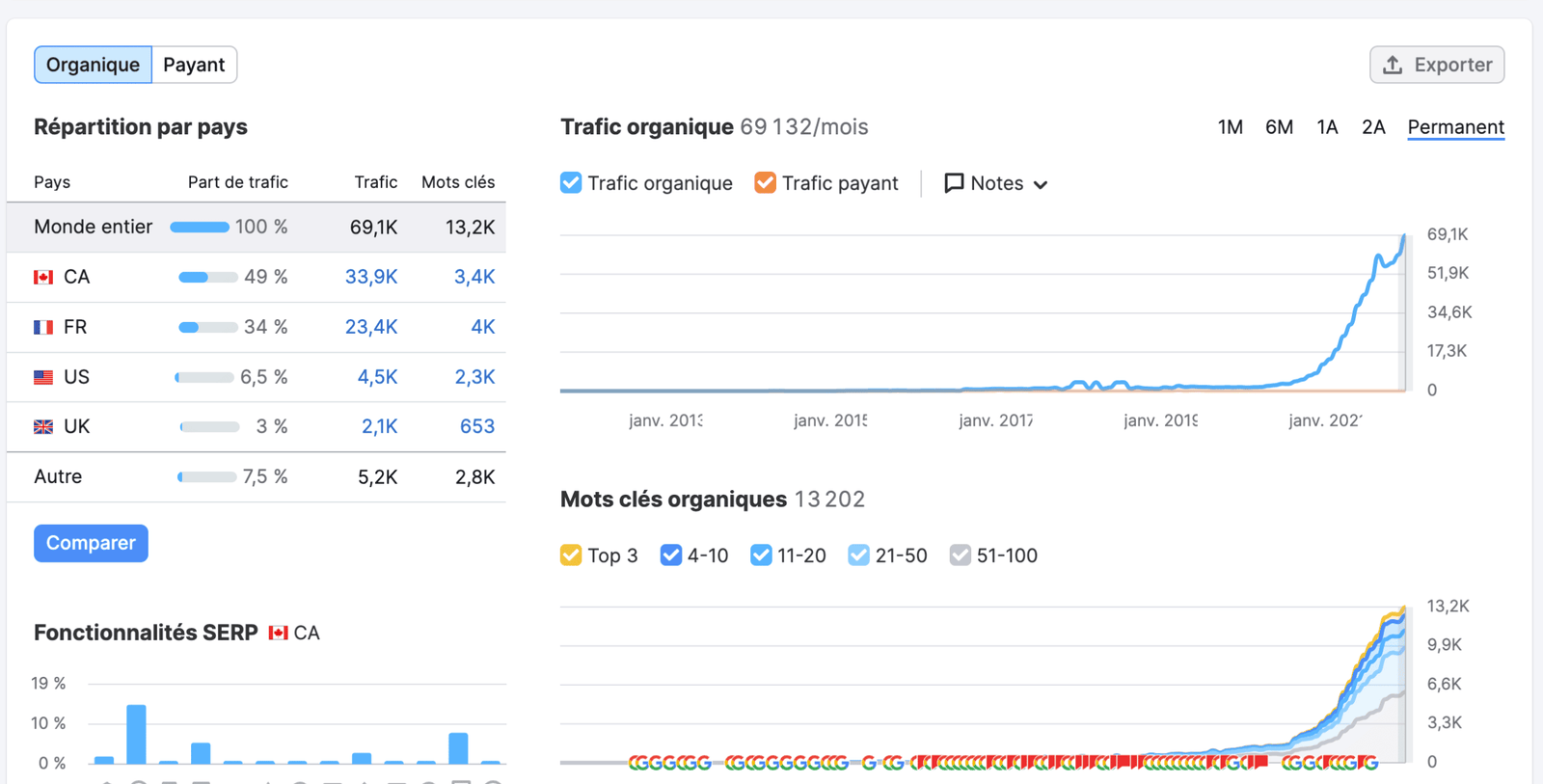
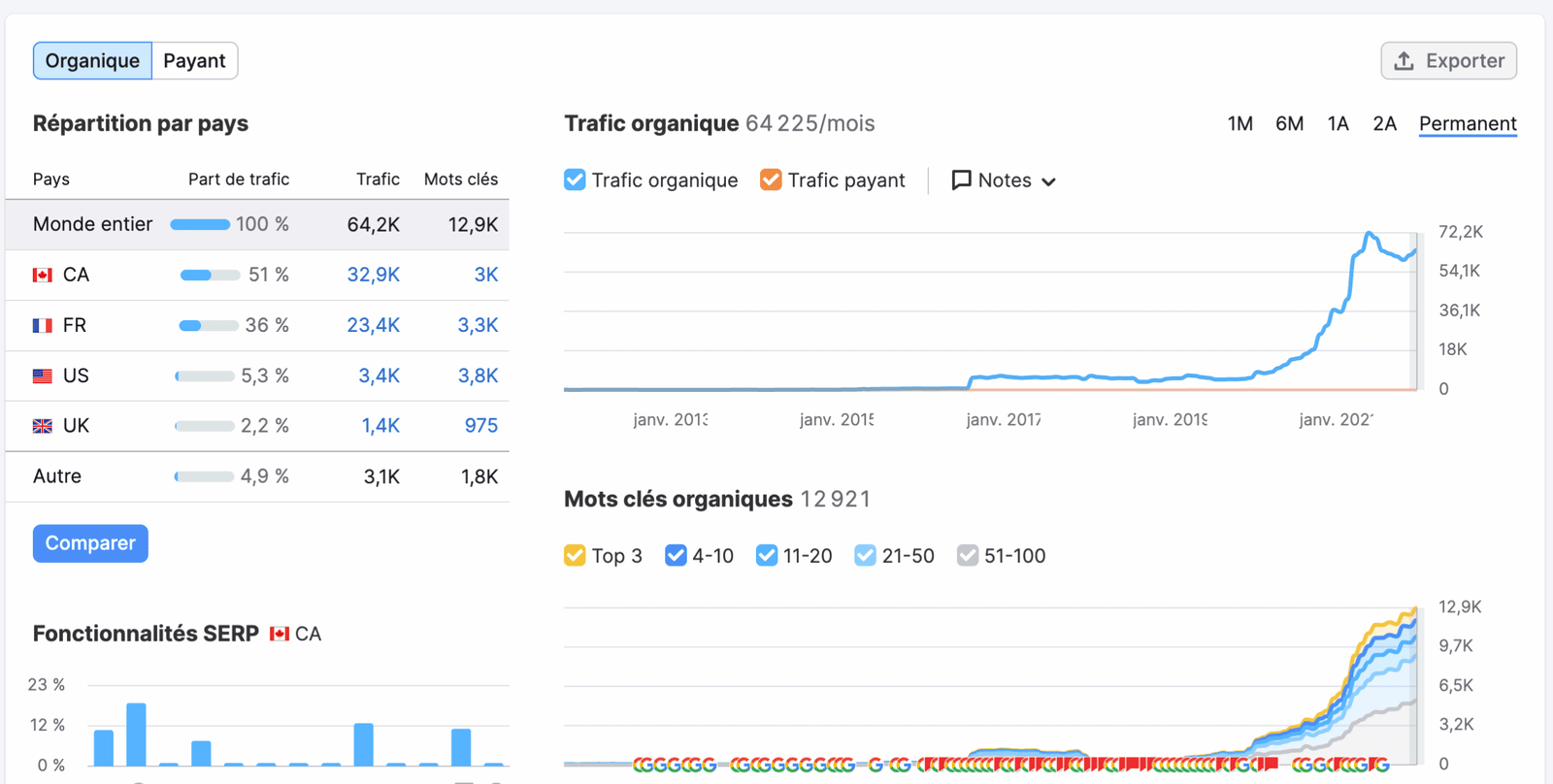
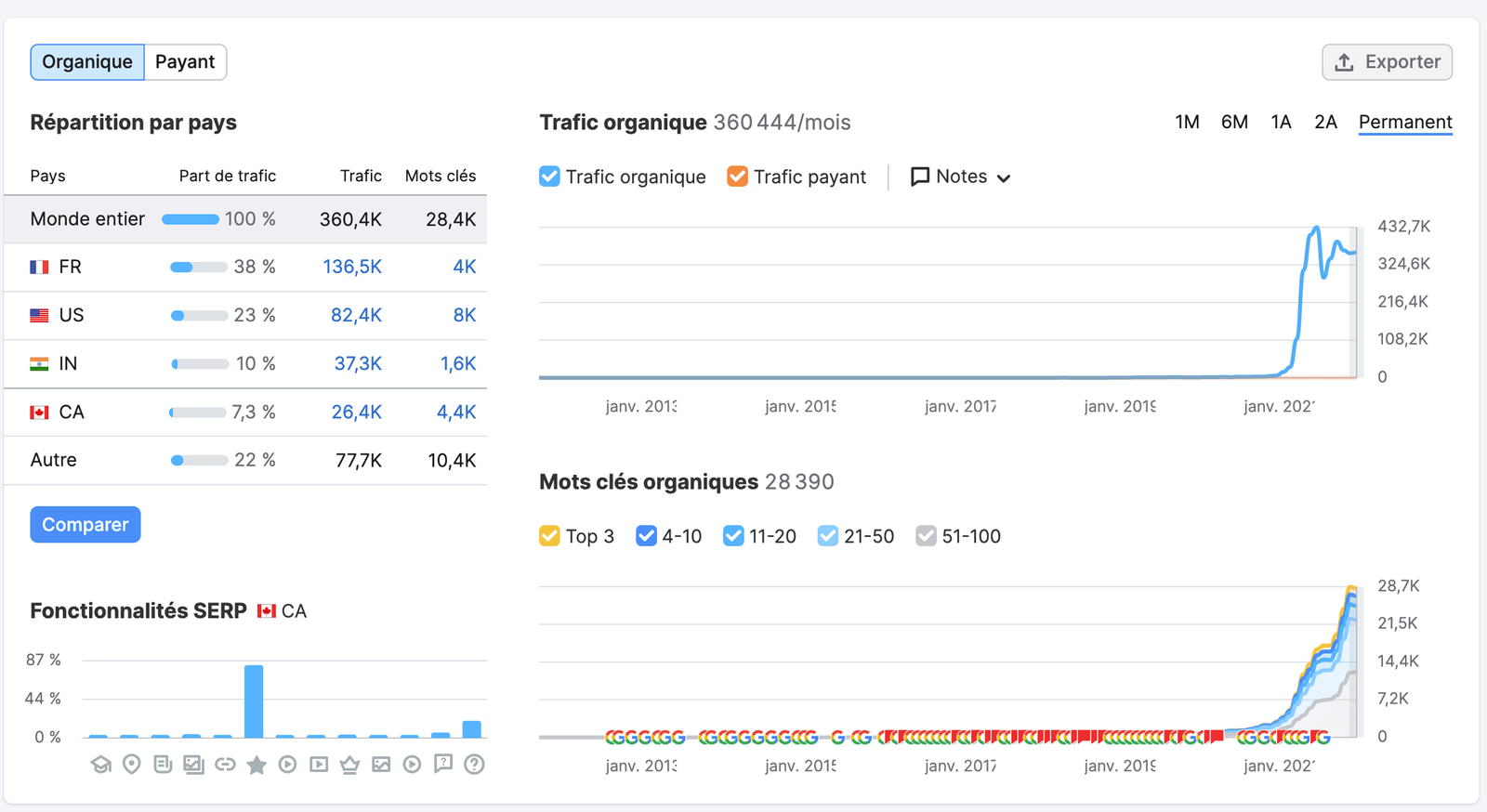
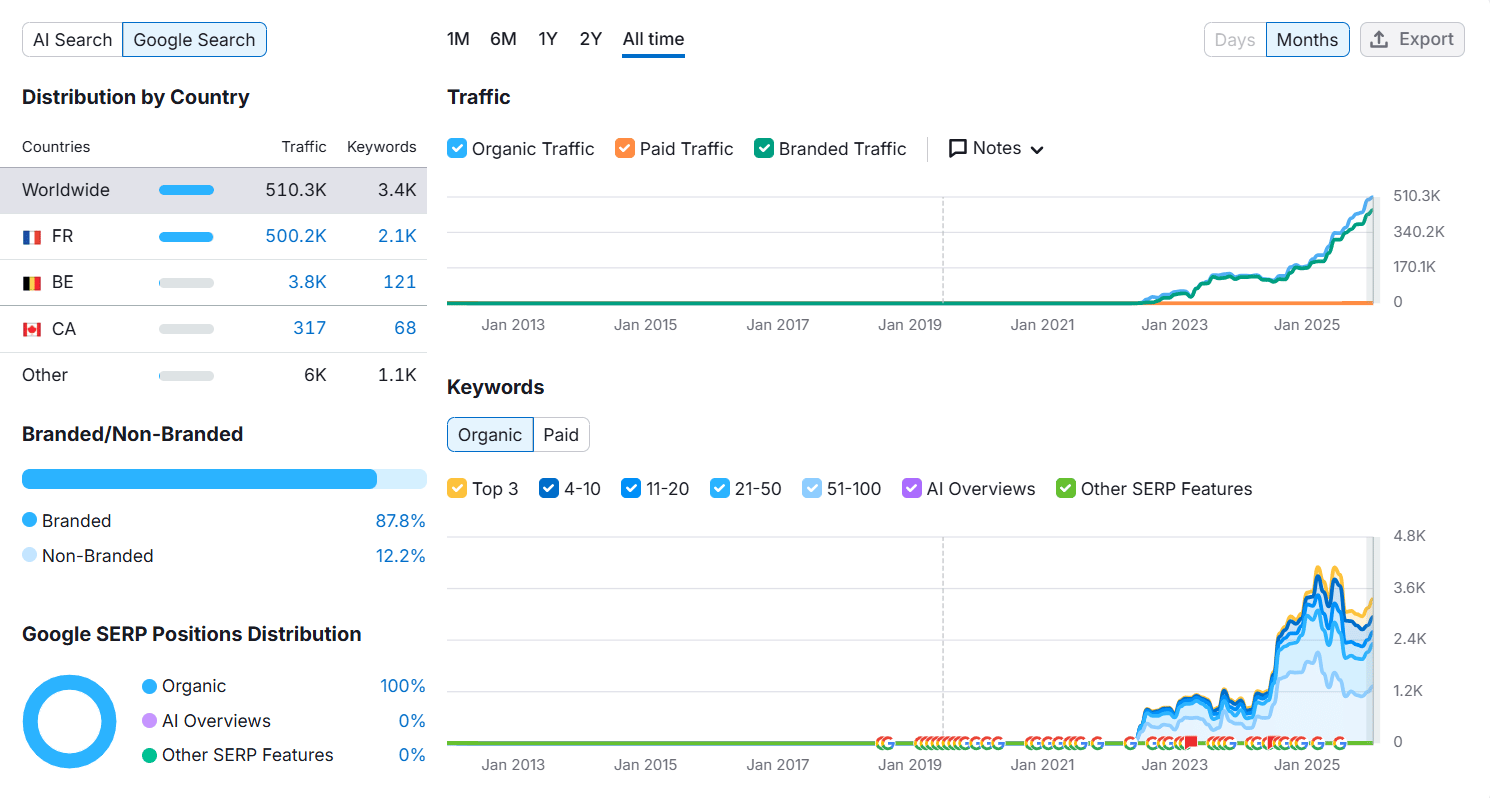
Our adult e-commerce SEO services
As an SEO agency that works in restricted markets, SEO Montreal™ combines the groundwork of our adult SEO agency with the store mechanics of our e-commerce SEO agency. Each mandate starts with the categories that bring sales today and the ones your competition ranks for without you.
Category and collection pages that rank
Category pages carry the most valuable searches of an adult store: a product type, a material, a use, a buyer. We build the category tree around search demand, write a short intro for each collection page and link categories to their closest guides, so Google understands which page answers which search.
Product pages beyond the manufacturer text
Most adult stores sell the same products with the same supplier descriptions, which gives Google little reason to rank one store over another. We rewrite the product descriptions that matter most with materials, dimensions, care instructions and the questions buyers ask, and add product structured data with price, availability and reviews where you have them.
Adult labels for SafeSearch and Google Shopping
SafeSearch is designed to filter photo-realistic sex toys, and Google Shopping treats adult merchandise as restricted content. We add the adult rating markup to explicit pages for SafeSearch and label adult products for Shopping in Merchant Center or in your product markup, and keep non-explicit pages, such as guides, free of explicit images so Google can classify them correctly.
Technical SEO for Shopify and WooCommerce stores
Filters, variants, sort orders and duplicate product URLs multiply fast on an adult online store. We set canonical tags and crawl rules on those templates, handle out-of-stock and discontinued products, fix page speed on mobile and keep the index focused on pages that convert.
Buying guides and sexual wellness content
Shoppers research before buying a sex toy: which material is body-safe, how to clean a product, what suits a beginner or a couple. We write those buying guides for your blog in non-explicit language, reviewed by your team, and link each one to the matching category.
Local SEO for physical sex shops
When your store also has a physical location, local SEO brings shoppers searching nearby. We work on your business profile where Google’s guidelines allow it, on a location page with hours and directions, and on consistent store details across directories.

Want more orders from organic search?
Send us your store: we look at which categories rank, which ones your competitors take and what holds your product pages back, with no commitment.
Everything about adult e-commerce SEO
11 min read·By SEO Montreal™
Why SEO carries adult e-commerce
Paid acquisition is narrow for an adult store. Google Ads restricts sexual merchandise to limited cases, Merchant Center treats adult products as restricted content, and other ad platforms have their own restrictions on adult products. Organic search is the channel an adult store controls most directly, and the traffic it brings keeps arriving after a campaign ends.
That also makes the organic competition intense: marketplaces, large sexual wellness brands and specialist sex shops all target the same categories. Visibility comes from covering searches more precisely than they do, through better categories, better product pages and content that answers real buying questions.
Technical pitfalls in sex toy store SEO
Adult online stores share the technical problems of any store, with a few that hit them harder. Four come up often in sex toy store audits.
Filters, variants and duplicate URLs
Filtering by material, color, size or vibration type can create thousands of URLs that show the same products in a different order. We decide which filtered pages match real searches and deserve the index, such as a material plus product type, and keep the rest out with canonical tags or crawl rules. Variants of one product usually share one canonical product page, with each variant reachable by its own parameter URL, so rankings aren’t split across colors.
Out-of-stock and discontinued products
Adult catalogs change as brands update their lines. A product that is temporarily out of stock keeps its page, with clear availability in the product markup. A discontinued product with a direct successor gets a redirect to it. One without a successor can stay live as an unavailable page that links to its category, or return a 404 when it has no traffic or links left.
Supplier descriptions copied across stores
When dozens of stores publish the same manufacturer text, Google has little to separate them and often shows only a few of those pages for a given search. Rewriting every product page is rarely realistic, so we prioritize the products with search demand and margin, then build unique category text and guides that give the whole store original content.
An age gate on the whole store
Some adult stores put an age gate in front of every page. Google warns that non-explicit content hidden behind an age gate can lead its systems to classify the whole site as explicit, and that Googlebot should be able to crawl gated content after verifying its requests. Gate what your markets require, keep it off guides and non-explicit categories where you can, and check that crawling still works.
Product images and SafeSearch for sex shops
Google’s guidelines for sites with explicit content list photo-realistic sex toys among the visual content SafeSearch is designed to filter, along with pages whose links, pop-ups or ads point to explicit content. Product and category pages with those images will mostly reach shoppers with SafeSearch off, and that is expected: they should be labeled for what they are, with the adult rating markup where needed.
Guides on materials and care, gift ideas and brand pages without explicit images can be classified as non-explicit, although Google’s guidelines say pages that link to explicit content can be filtered too. Google also recommends separating explicit pages on another domain or subdomain when a site has significant amounts of both explicit and non-explicit content, so the rest of the site isn’t treated as explicit.
Keyword research for adult e-commerce
Adult e-commerce keywords range from broad product types to very specific long-tail searches: a material plus a product, a feature, a use for couples or beginners, a size, a brand, a price range. Shoppers also use euphemisms and gift-related terms, and questions about safety, cleaning and discreet shipping. Each search intent maps to a page type: categories for product types, filtered pages for strong combinations, product pages for brands and models, guides for questions.
We use Search Console data, keyword research in tools such as Ahrefs and your own site search to find what shoppers type. Long-tail category combinations usually convert better than broad terms and face less competition from marketplaces, so they get priority in the first months of a mandate.
On-page SEO and adult store architecture
A clear category tree helps shoppers and search engines at the same time. We keep it shallow, with each category reachable in a few clicks from the homepage, breadcrumbs on every page and internal linking from guides to categories and from categories to their best products.
On each indexed page, the title tag and meta description match the search the page targets, the H1 names the product type plainly, and product schema carries price, availability, brand and reviews. Customer reviews on product pages add unique, current text that supplier descriptions cannot, and they answer the questions shoppers hesitate to ask elsewhere.
Content marketing for adult online stores
Content marketing gives an adult store pages that can rank for informational searches before a shopper is ready to buy. The guides that work best answer practical questions: how to choose a first product, which materials are body-safe, how to clean and store products, what to look for in lubricant compatibility, how discreet shipping works on your store.
We keep these guides factual and non-explicit, avoid medical claims, and ask your team or a qualified expert to review anything health-related. Each guide links to the category that matches its reader, which turns organic traffic from questions into product views.
Google Shopping for adult e-commerce stores
Google lets adult stores list products in Shopping features with restrictions. Its guidelines ask merchants to label adult-oriented products in Merchant Center feeds with the adult attribute, or with the hasAdultConsideration property in product markup, and state that this label doesn’t affect a site’s visibility in organic web results. Merchant Center’s adult-oriented content policy lists sex toys among restricted content for free listings, and restricted listings may not show to every customer in every location.
For SEO, that means two parallel tracks: correct labeling for free listings and Shopping, and organic category and product pages that do the bulk of the work in regular results.
Link building for adult online stores
Off-page SEO is harder for adult retailers because mainstream publishers are cautious, so backlinks come from sexual wellness media, sex educators, relationship and lifestyle publications, gift guides and brand partners. Digital PR works well when you bring data: a survey of your customers, a trend in your sales, a study journalists can cite. We skip bought links and link networks, which Google treats as spam.
Our adult e-commerce SEO method in 4 steps
Audit categories, products and the index
We crawl your store, read Search Console and compare the pages Google indexes with the pages that bring revenue. You get the list of categories to build, product pages to rewrite and URLs to remove from the index.
Prioritize by demand and margin
We rank opportunities by search demand, conversion potential and margin, so the first months go to the categories and products that can pay back fastest.
Execute on your store
Our team works directly in Shopify, WooCommerce or your custom platform: category text, product descriptions, product schema, filters, redirects and guides. Content goes through Google Docs for your approval before it goes live.
Measure revenue from organic search
The monthly report tracks rankings on your main categories, organic traffic, conversions and revenue from organic search. The mandate is month to month with 30 days’ notice, and everything built stays yours.
How much does adult e-commerce SEO cost?
Adult e-commerce SEO is part of our adult work, where a mandate usually starts at $3,000 per month. The price depends on the size of the catalog, the number of categories and languages, the state of the store and the competition in your product types. Google Ads management is included with no management fee wherever Google’s policy allows the ads. To get a figure for your store, tell us about your catalog.
Why stores choose our adult e-commerce SEO
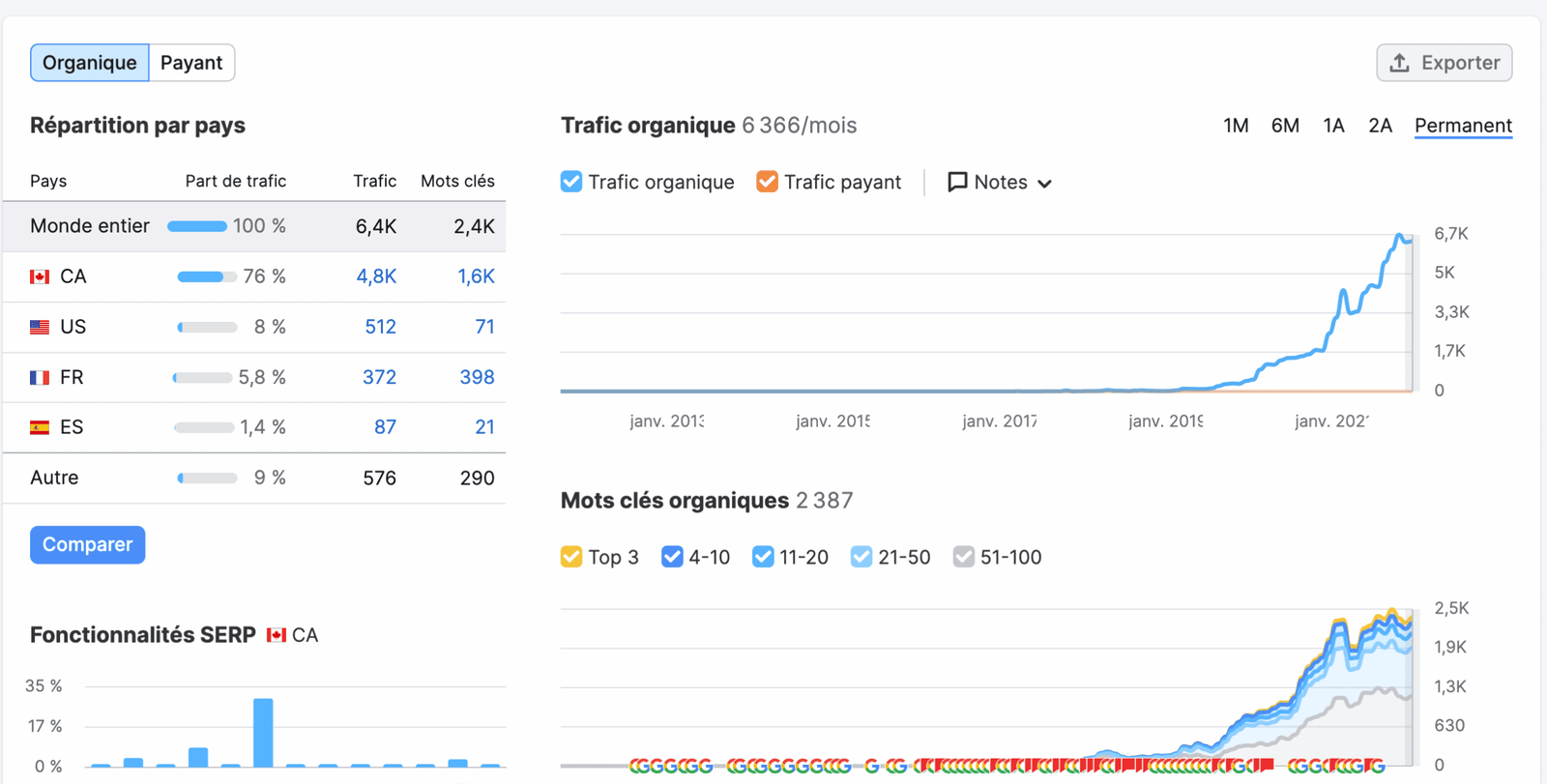
SEO Montreal™ has worked with more than 500 clients in over 25 industries, including adult businesses and e-commerce stores. One adult website we work with gets 3.2 million visits per month on its adult pages alone, and, across industries, one of our e-commerce clients reaches 360,400 visits per month. Our team executes directly on your store, and our case studies stay anonymous. Our GEO agency team also works on how your guides and brand pages appear in AI answers such as ChatGPT or AI Overviews.
What is adult e-commerce SEO?
Adult e-commerce SEO, also called sex shop SEO or adult toy store SEO, is the search engine optimization of online stores that sell sex toys, lingerie and sexual wellness products. It covers category and product pages, product data and markup, technical SEO on filters and variants, buying guides and link building, adapted to SafeSearch and to the restrictions on adult advertising and Shopping listings. It differs from general e-commerce SEO by those restrictions and by the discretion shoppers expect.
Adult e-commerce SEO FAQ
Partly. SafeSearch is designed to filter photo-realistic sex toys and pages that link to explicit content, so most product pages reach shoppers with SafeSearch off. Guides and brand pages without explicit images have a better chance of being classified as non-explicit, but links to explicit pages can also be filtered. We label explicit pages correctly and keep the rest of the store free of explicit images.
Yes, with restrictions. Merchant Center treats sex toys and other adult merchandise as restricted content, and listings may not show to every customer in every location. Google asks merchants to label adult products with the adult attribute in their feed or the hasAdultConsideration property in their markup. That label doesn’t change the store’s visibility in organic web results.
For the products that matter, yes. When many stores publish the same supplier text, Google has little reason to rank one over another. We start with products that have search demand and good margins, add materials, care, dimensions and answers to buyer questions, and leave low-priority products for later. Unique category text and guides add original content to the rest of the store.
It can. Google warns that non-explicit content behind an age gate can lead its systems to treat the whole site as explicit, and it asks sites to let verified Googlebot requests crawl without triggering the gate. Keep the age verification your markets require, avoid gating guides and non-explicit pages where the law allows it, and test crawling after every change.
It can work well. Shopify’s templates rank when the category text, product content and internal links are strong. Its main SEO quirks are product URLs repeated inside collection paths, which themes often link to even though Shopify canonicalizes them, limited control over some URLs and filter pages that need rules. We work with those limits, and the same principles apply to WooCommerce or a custom platform.
It depends on the store, the catalog and the competition in your product types. Technical fixes and better category pages can show movement on long-tail searches first, while competitive head categories take longer, often several months. We set goals after the first audit and report on rankings, organic traffic and revenue from organic search every month.
Yes. Local SEO for a physical store relies on a complete business profile where Google’s guidelines allow it, a location page with hours, directions and the products you carry, and consistent store details across directories. When the shop also sells online, the location page links to the online store, so local searches can turn into store visits or orders.
They help in two ways. Reviews add unique, current text to product pages that otherwise share supplier descriptions, and they answer questions shoppers hesitate to ask elsewhere. With review markup on the product page, they can also appear in rich results when Google shows them. Collect them within your platform’s rules, without incentives that skew them.
Let’s look at your adult store
Book a free, confidential consultation: 30 minutes, no commitment, a reply within 24 business hours.