Porn tube SEO: index the pages that earn traffic
Adult tube site SEO for video libraries with hundreds of thousands of URLs.
Get a first 100% free analysis of your website.
SEO Montreal™ works on the crawl budget, category and tag pages, video watch pages and moderation signals of porn tube sites, so Google spends its time on the pages that bring organic traffic and signups.







Our SEO case studies
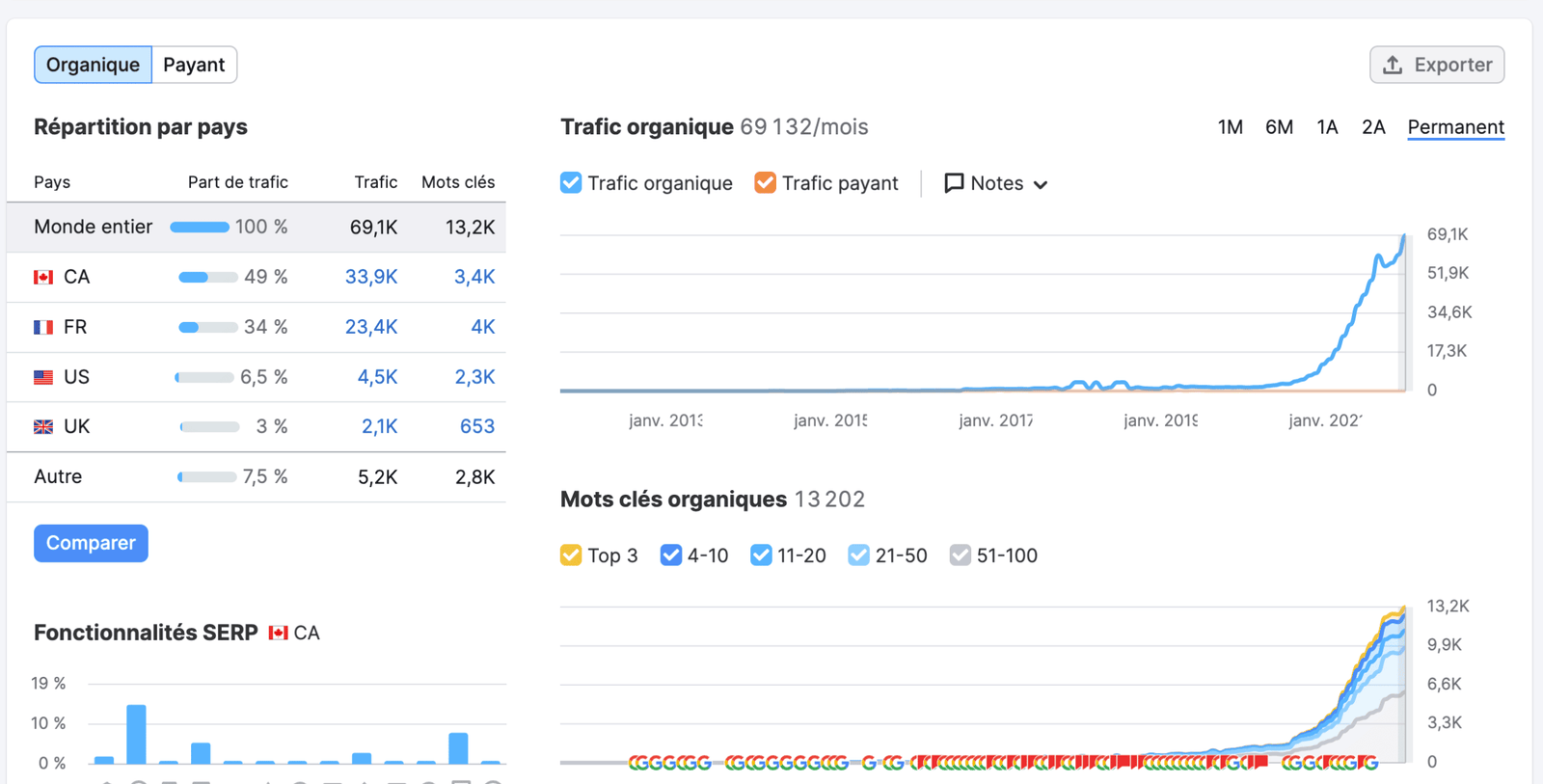
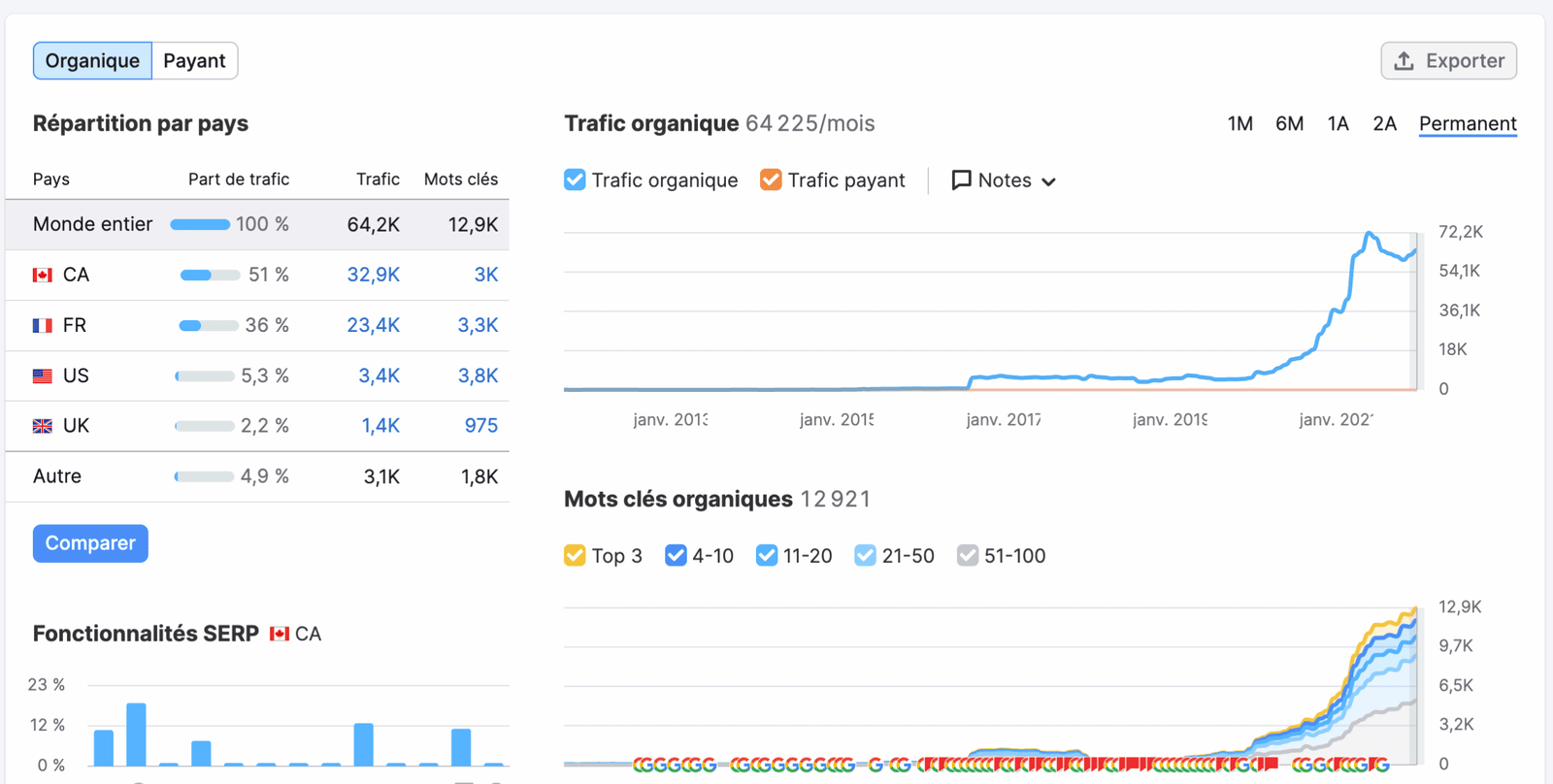
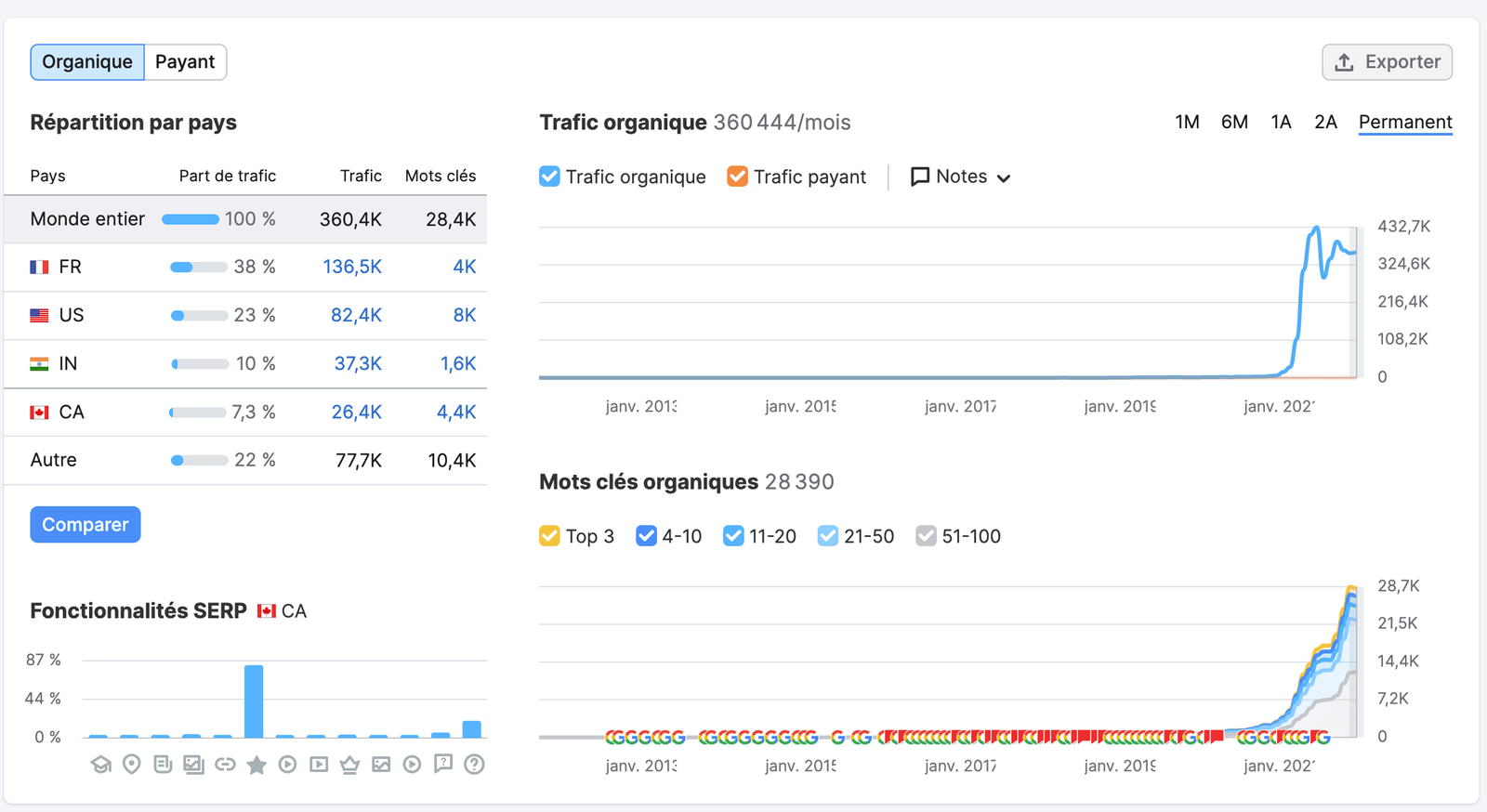
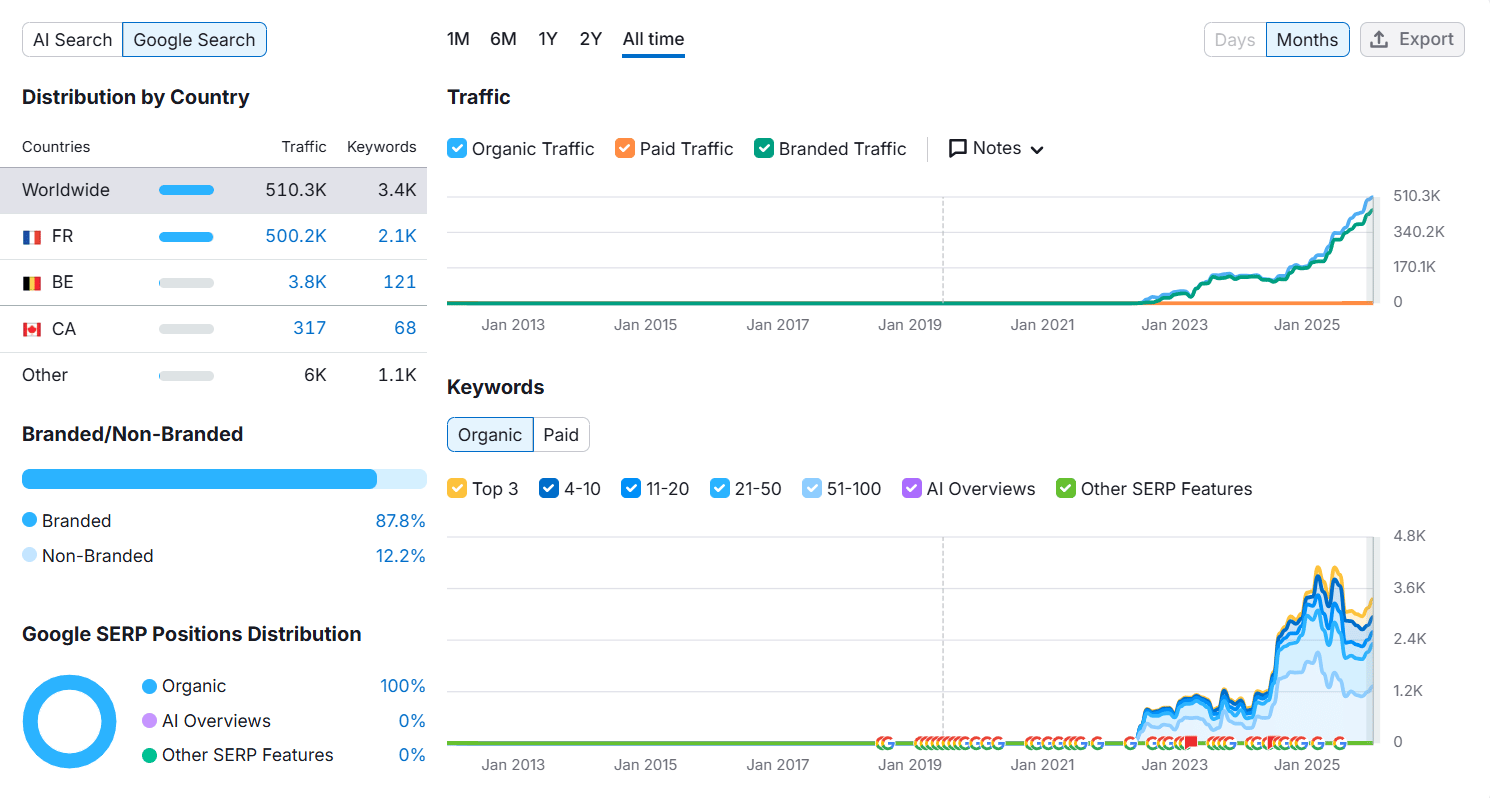
Our porn tube SEO services
As an SEO agency that takes on restricted markets, SEO Montreal™ applies the groundwork of our adult SEO services to the scale of a tube site: templates, filters and a video library that grows every day. Each mandate starts with a crawl of your site and, when you can share them, your server logs, before any keyword list.
Crawl budget and indexation rules
We decide which URL types deserve the index: categories, useful tags, performer pages and watch pages. Sort orders, filter combinations, internal search pages and empty tags get blocked or consolidated, so Googlebot stops spending its visits on near-identical URLs. Those rules are written into robots.txt, canonical tags and your sitemaps, then checked against the logs.
Video watch pages Google can read
Every video gets a watch page where it is the main content, with a unique title tag, a written description, a thumbnail at a stable URL and VideoObject structured data. We check that Googlebot can fetch the video files themselves, which Google needs for previews and for its automated safety checks on explicit pages.
Category, tag and performer pages that rank
Category and tag pages carry the head terms and the long tail of a tube site, yet most of them ship as a grid of thumbnails with no text. We rework the templates so each indexed page gets an intro written for its niche, a clean meta description and internal links to related categories. Tags with no search demand get merged into the closest category.
Duplicate videos and embeds
The same scene often reaches a tube site several times: different uploaders, partner feeds, trailers from paysites and embeds from affiliates. We group duplicates under one canonical watch page, so authority stops splitting across copies and Google indexes the version you choose.
Explicit content signals and age gates
We label explicit pages with the adult rating markup, set family_friendly to no in the video sitemap and keep your blog or brand pages on a separate domain or subdomain, without links to explicit pages, when they should reach SafeSearch users. The age verification your markets require stays in place for human visitors, while verified Googlebot requests crawl without hitting the gate.
Moderation and takedowns that protect rankings
On a site with user uploads, a high volume of valid removal requests can drag down pages that did nothing wrong. We work with your compliance team on upload verification and on blocking re-uploads of removed content, then follow the copyright notices Google sends through Search Console and the requests published in Google’s Transparency Report, alongside your own records.

Is your tube site losing crawl budget?
Send us your domain: we look at what Google crawls, what it indexes and where your traffic leaks, with no commitment.
Everything about porn tube SEO
13 min read·By SEO Montreal™
How Google treats an adult tube site
Google’s guidelines for sites with explicit content and its ranking systems guide describe three behaviors that shape porn tube SEO more than any keyword choice. They explain why two tube sites with similar libraries can get very different search visibility.
SafeSearch filtering of video pages
SafeSearch filters pages with explicit images or videos, and pages whose links, pop-ups or ads point to explicit content, for every user who has the filter on. Explicit watch pages therefore compete only for users with SafeSearch off or set to blur. Even then, Google’s query understanding tries to show explicit results only to searches that seek them, which makes search intent the first filter of an adult video SEO plan.
Video files Google can fetch
Google asks explicit sites to let Googlebot fetch their video files, because it runs automated protections against violative content on them. When it can’t fetch the file and its systems judge the page may be explicit, it may demote or filter the page, especially in Video mode. Hosting video on a CDN that blocks bots, or behind signed URLs that expire before the crawl, can keep a tube site’s videos out of Video mode.
Demotion after removals
Google’s guide to its ranking systems states that a significant volume of valid copyright removal requests about a site can lead it to demote other content from that site. The explicit content guidelines add that sites receiving a significant volume of removals for intimate imagery shared without consent, or for fake explicit content, see all their pages demoted. For a tube site built on uploads, the volume of valid removals against the domain can affect how every page ranks.
Crawl budget on a porn tube site
Google’s crawl budget guide is written for sites with more than a million unique pages that change weekly, or more than 10,000 pages that change daily, and a busy tube site often fits both. At that scale, Googlebot cannot visit every URL often, so every crawl spent on a duplicate is a crawl a new video doesn’t get.
Tags, filters and sort orders
A video library with 200 tags, five sort orders and a duration filter can generate millions of URLs from a few thousand videos. Sorted and filtered versions of the same list are exactly the duplicates Google suggests consolidating, or blocking with robots.txt when consolidation isn’t possible. A noindex tag alone doesn’t save crawl, because Googlebot still has to request the page to see it.
Deleted videos and soft 404s
Tube sites remove videos every day. A removed video should return a 404 or 410 status, not a page that says the video is gone while answering 200, because Google keeps crawling those soft 404s and wastes budget on them. When a video was removed for a partner change or as a duplicate, not after a takedown, we redirect it to the remaining watch page for the same scene.
Sitemaps that list only what deserves the index
The video sitemap should list the watch pages you want indexed, with an accurate lastmod date, the thumbnail, the title and the family_friendly value. Category and performer pages get their own sitemap. Anything blocked or canonicalized elsewhere stays out, so the sitemap and the index rules tell Google the same thing.
Category and tag pages in tube site SEO
On many tube sites, categories and tags bring more organic traffic than individual videos, because they match the niche searches people actually type. A category page targets the head term of its niche; a tag page targets a narrower long-tail combination. Both need text that a thumbnail grid can’t provide: a short intro describing the niche in non-graphic terms, related categories and a title tag written for the search, not for the template.
The common mistake is indexing every tag. A tag with three videos and no search demand creates a thin page that competes with the category above it. We sort tags by demand and by the number of videos they hold, keep the strong ones as indexable pages, merge the rest and build a silo where each category links down to its best tags and up to its parent. Pagination stays crawlable for discovery, with a self-referencing canonical on each page, while page one carries the intro text.
Video watch pages for adult video SEO
A watch page is a page whose main purpose is to show one video, and Google’s video SEO guide says an indexed page doesn’t guarantee an indexed video. The video needs a valid thumbnail at a stable URL that Googlebot can fetch, and each video needs its own name, thumbnail and upload date, plus a description, in VideoObject structured data or the video sitemap.
On a tube site, the title and description are usually generated from the uploader’s text or the tags, which produces thousands of near-identical snippets. We rewrite the template so titles carry the niche and the performer, descriptions add a sentence of real context and alt text describes the thumbnail in neutral words. Clip structured data can mark key moments when the video has clear segments, and the performer name links to the performer page, which carries its own search demand.
Managing duplicate scenes on porn tube sites
Duplicates reach a tube site through partner feeds, re-uploads, trailers and embeds from paysites or affiliates. Google supports canonical markup to identify the primary version of a page duplicated in several places. When the same scene sits on several of your URLs, a canonical on each copy points to the strongest watch page; when your page only embeds a video hosted elsewhere, it needs its own text to be worth indexing at all.
We audit duplicates by title, duration and thumbnail hash, then decide case by case: keep, canonicalize, redirect or remove. The result is a smaller index with stronger pages, which is what lets a tube site compete with bigger competitors on the same keywords.
Uploads, moderation and porn tube SEO
Google recommends that platforms with sexually explicit content verify publishers, moderate uploads and use hash matching and classifiers to detect child sexual abuse material, and it removes CSAM and demotes sites with a significant share of it. For porn tube SEO, those controls are also what keeps removal requests, and the demotion that can follow, at a low level.
We don’t run moderation, but we connect it to search: removed URLs return the right status, repeat uploads of removed content are blocked so fewer notices reach Google, and pages that drew complaints leave the sitemap on its next update. Your legal and compliance teams set the rules; we make sure search engines see them applied.
Keyword research for adult tube sites
Tube site keyword research starts with the categories and niches that drive volume, then goes down the long tail: niche plus performer, niche plus format, niche plus language. Performer names carry their own demand, and so do comparison and navigational searches around paysites, studios and other porn sites. Every keyword is mapped to one URL type, so a category, a tag and a performer page never fight over the same search.
Search Console shows the queries that already reach you, while Ahrefs and similar tools estimate the demand you don’t capture yet. Google Keyword Planner, for one, excludes adult ideas by default, so we check settings before reading the data. For international libraries, each language gets its own research and its own URLs connected with hreflang, because adult search vocabulary changes from one market to the next.
Speed and hosting for tube sites
Thumbnail grids, previews on hover and ad scripts make tube sites heavy, and a large share of visitors arrive on mobile. Core Web Vitals and page speed are part of page experience, so we work with your developers on image sizes, lazy loading below the first screen, a CDN for thumbnails and video, ad scripts that don’t block rendering and HTTPS on every URL.
Link building for adult tube sites
Mainstream sites rarely link to tube sites, so backlinks come from adult industry media, partner paysites, review sites and communities that accept adult brands. We earn links to category and brand pages rather than to individual videos, and we skip link networks, because Google’s spam systems can discount them or trigger a manual action, a penalty that takes months to lift.
Our porn tube SEO method in 4 steps
Crawl the site and read the logs
We crawl your templates, export Search Console data and, with your access, read server logs to see what Googlebot actually requests. You get a map of the URL types that waste crawl budget and the ones that earn traffic.
Set the index rules
We write the rules for tags, filters, pagination, internal search, duplicates and deleted videos, then translate them into robots.txt, canonicals, status codes and sitemaps with your developers.
Rework the templates that rank
Category, tag, performer and watch page templates get their text, titles, structured data and internal links. Each change ships on a sample of pages first, so we can measure its effect before rolling it out to the whole library.
Measure indexation, traffic and signups
The monthly report tracks indexed pages by type, crawl activity, rankings on your main categories, organic traffic and the signups or revenue it brings. The mandate is month to month with 30 days’ notice, and everything built stays yours.
How much does porn tube SEO cost?
Porn tube SEO is part of our adult work, where a mandate usually starts at $3,000 per month. The price depends on the size of the library, the number of templates and languages, the state of the crawl and how much your developers can ship each month. Large networks with several tube sites go to a custom mandate. To get a figure for your site, tell us about your platform.
Why tube sites choose our tube site SEO
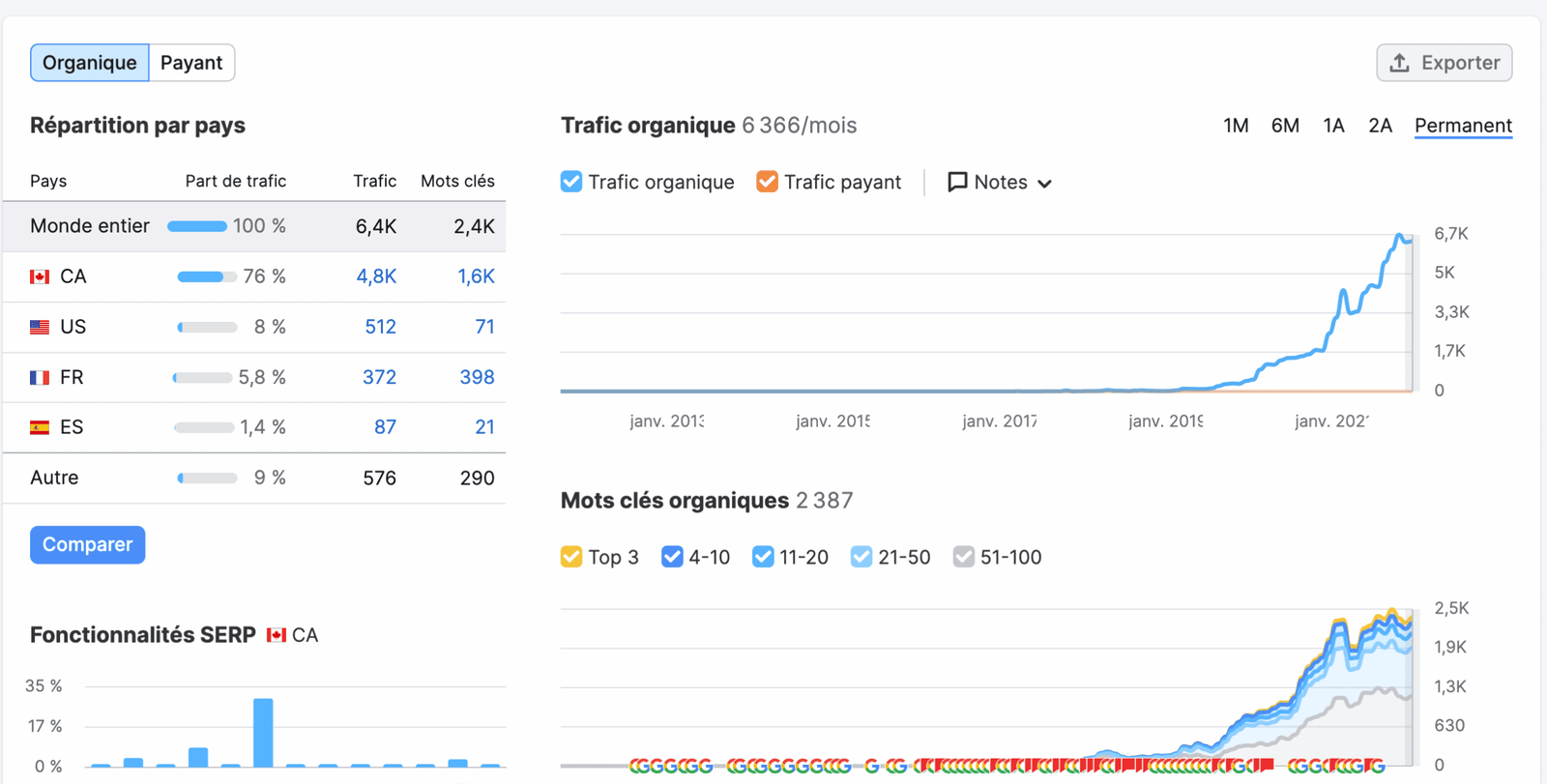
SEO Montreal™ has worked with more than 500 clients in over 25 industries, including adult businesses, and one adult website reached 3.2 million visits per month on its adult pages alone. Our team works in your CMS or with your developers on custom tube scripts, and our case studies stay anonymous. Live cam platforms have their own page on SEO for sexcam sites, and the non-explicit pages that AI tools such as ChatGPT, Perplexity, Gemini or AI Overviews may cite are the work of our GEO agency.
What is porn tube SEO?
Porn tube SEO, also called adult tube site SEO, is the branch of porn SEO that optimizes adult video platforms with large video libraries. The work spans crawl budget and indexation, category and tag pages, video watch pages and structured data, duplicate management, explicit content labeling and the moderation signals that protect rankings. It differs from general adult SEO by its scale: the work happens on templates and rules that apply to hundreds of thousands of URLs at once.
Porn tube SEO FAQ
Only the tags with real search demand and enough videos to form a useful page. A tag with a handful of videos and no searches creates a thin page that competes with its category. We keep strong tags indexable with their own intro text, merge weak ones into the closest category and block filter and sort combinations, so the index holds pages that can rank.
On a large library, yes. A video sitemap lists the watch pages you want indexed, with the title, description, thumbnail and lastmod date of each video, and the family_friendly value set to no for explicit videos. It helps Google find new uploads faster and tells it which videos to keep out of SafeSearch results. Removed videos leave the sitemap on its next update.
Usually because Google can’t fetch the video file, the page isn’t a real watch page or the thumbnail isn’t reachable at a stable URL. For explicit pages, Google may also demote or filter pages whose embedded video it can’t fetch. We test each watch page template with Search Console’s tools and fix the CDN, robots.txt or token rules that block Googlebot.
Its explicit pages can’t reach users with SafeSearch on, since the filter removes explicit videos and pages that link to them. A blog, guides or brand pages on a separate, non-explicit domain or subdomain can reach those users, as long as they don’t link to explicit pages, since SafeSearch also filters pages that point to explicit content. Google recommends that separation for sites that mix explicit and non-explicit content.
A deleted video should return a 404 or 410 status, leave the video sitemap and drop out of internal links. A page that says the video is gone while returning a 200 status is a soft 404, which Google keeps crawling. When a video was removed as a duplicate rather than after a takedown, a 301 redirect to the remaining watch page for the same scene keeps the traffic.
They can. Google says a significant volume of valid copyright removal requests about a site can lead it to demote other content from that site. Upload verification and blocking re-uploads of removed content keep that volume low. We follow the copyright notices Google sends through Search Console and the requests listed in its Transparency Report, so you see the trend before it affects organic traffic on your best categories.
Index rules and template fixes on a large tube site can change crawl activity within weeks, because Googlebot reacts to the new signals on every visit. Rankings on competitive categories take longer, often several months, depending on the competition and the authority of the domain. We set goals by page type after the first crawl and report progress every month.
Yes. Most tube sites run on custom code or a licensed script, so the work goes through your developers. We write specifications for each template and index rule, test them on a sample of pages and check the result in the logs and in Search Console before the change reaches the whole library.
Let’s look at your tube site’s crawl
Book a free, confidential consultation: 30 minutes, no commitment, a reply within 24 business hours.