Class action law firm SEO agency: get your cases found on Google
Reach the people a class action concerns, at the moment they search for it on Google.
Get a first 100% free analysis of your website.
SEO Montreal™ helps class action law firms in Canada and the United States get found in organic search through one page per case, legal content that follows each stage of the litigation and AI search visibility, with Google Ads management included in the mandate.







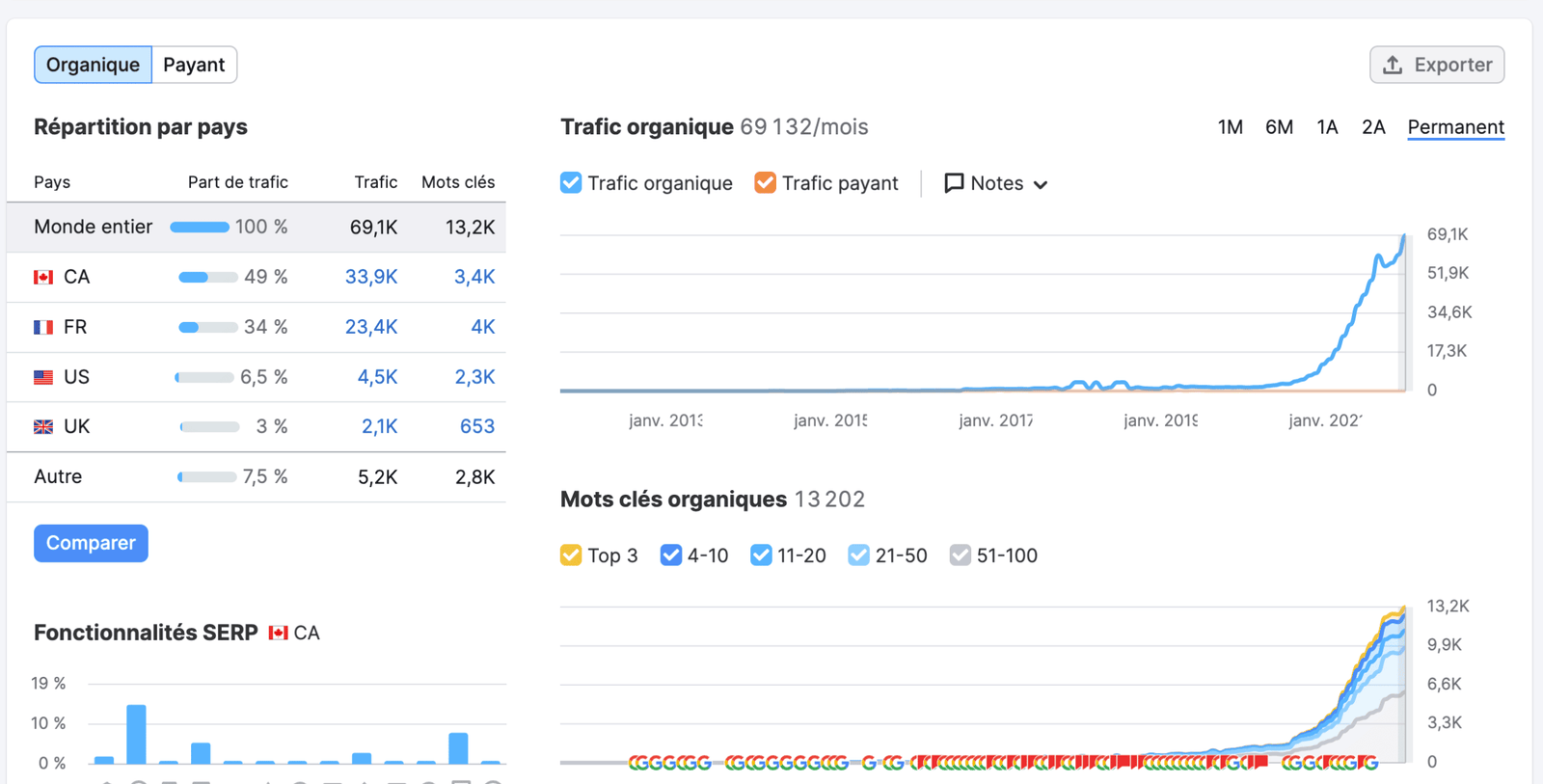
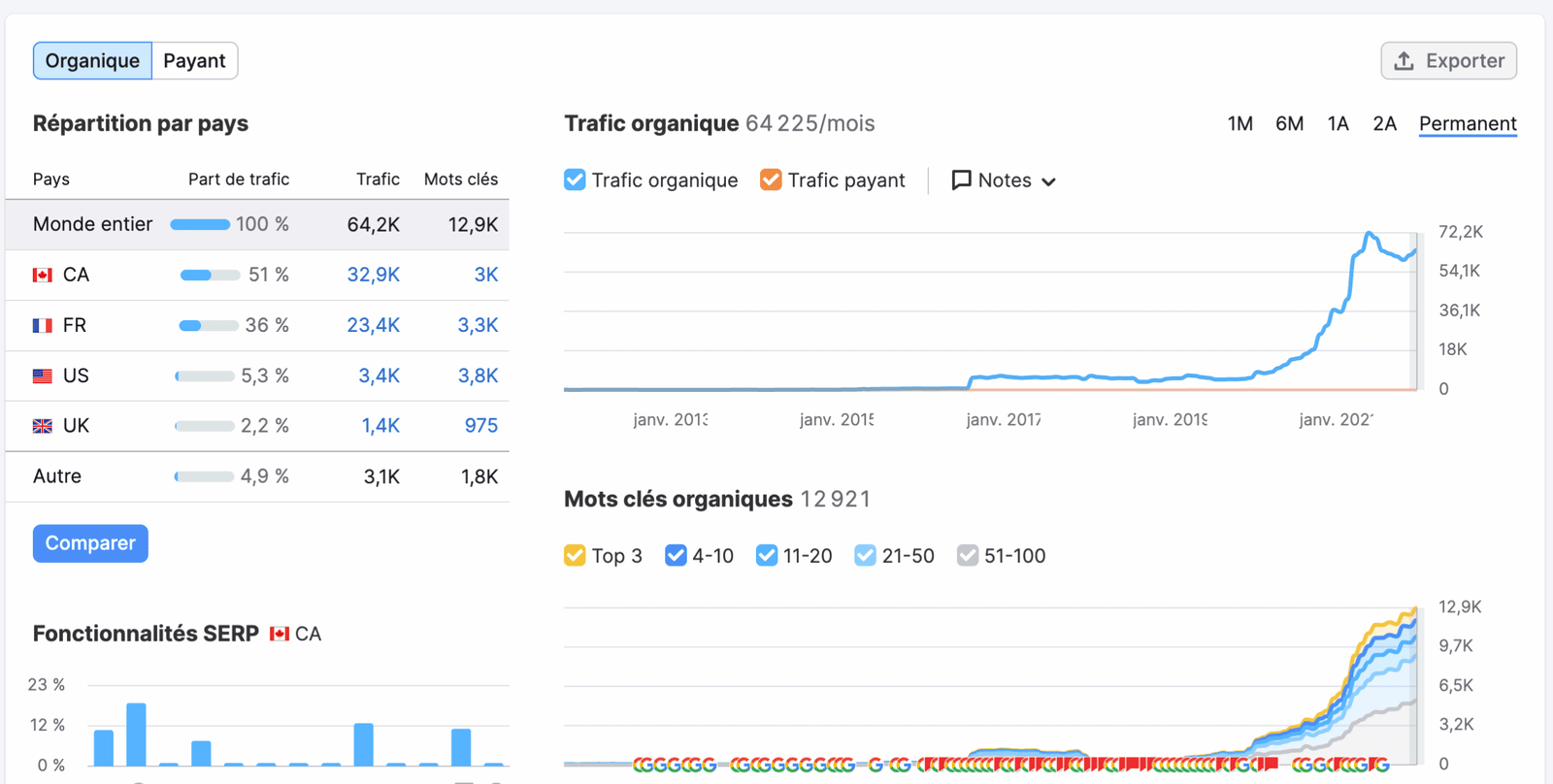
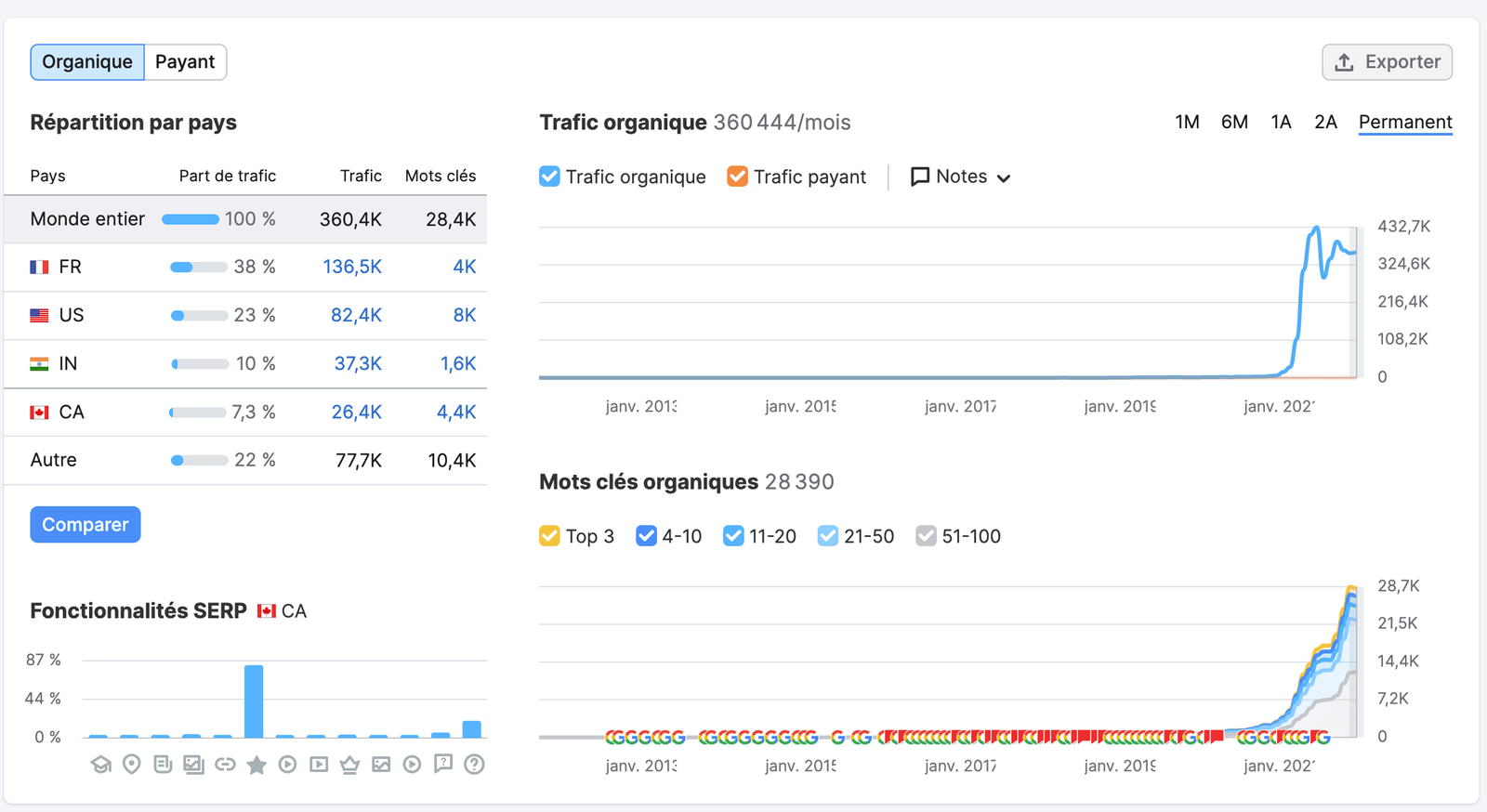
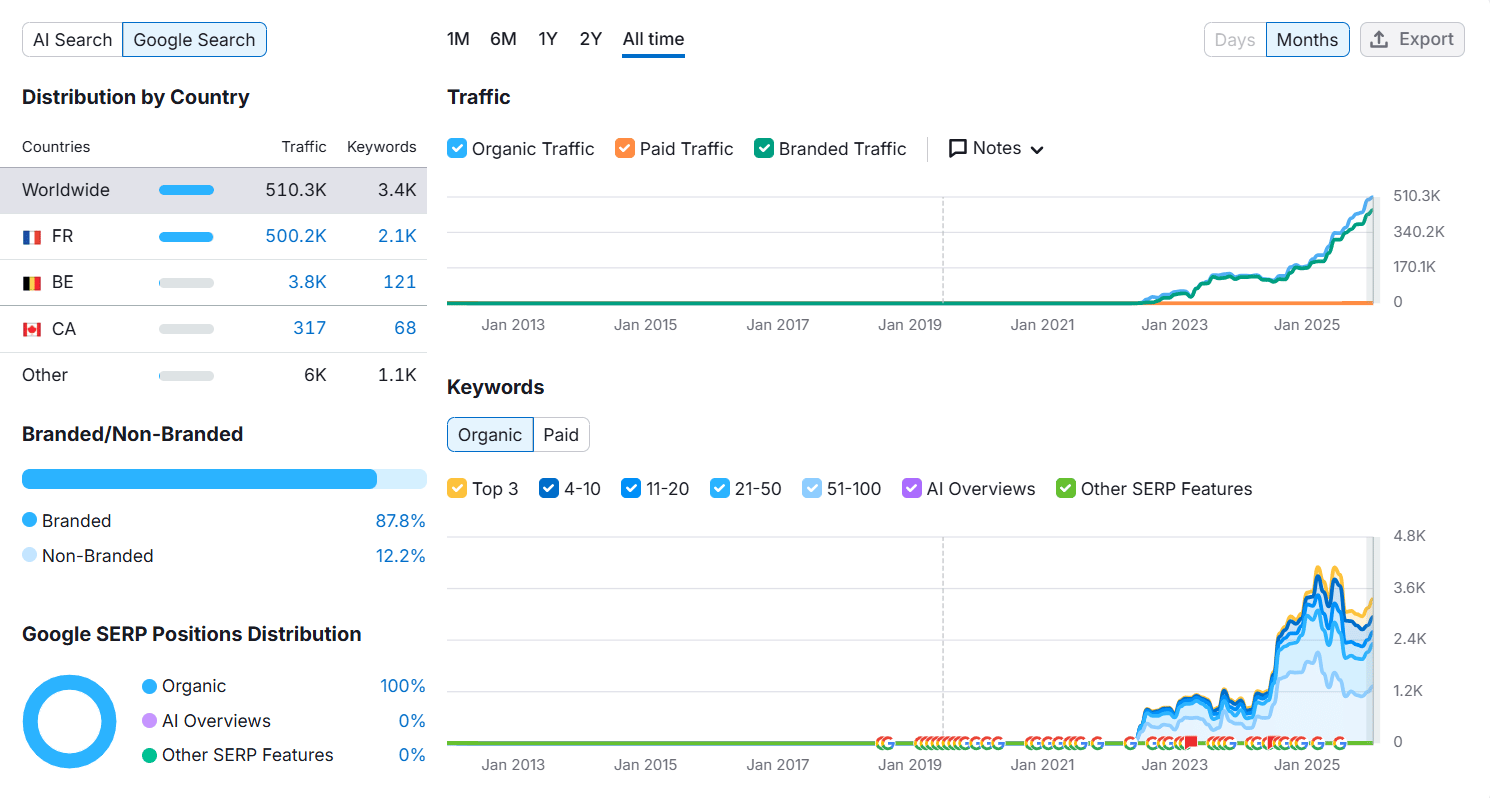
Our SEO case studies
Our class action SEO services
A potential class member rarely searches for a lawyer: they type the name of a company or a product, followed by “class action” or “lawsuit.” Our SEO agency in Montreal therefore builds your firm’s SEO around its lawsuits, for a national audience rather than a single city.
One landing page per class action
We build a dedicated page for each lawsuit: the company or product involved, the class definition, the representative plaintiff, the current stage and a form to follow the case. Each page is built around the company or product name and its common variations, the searches class members actually type.
Company name plus “class action” searches
We start keyword research from real searches: “[company] class action,” “[product] lawsuit,” “am I eligible,” “settlement payout,” “claim form.” These are high-intent searches, typed by people who want to know whether they are included and how to claim. The vocabulary also changes by jurisdiction: Quebec’s Code of Civil Procedure speaks of authorization, while Ontario and the US federal courts speak of certification.
Legal content that follows each stage
Each stage, from filing to the claims process, changes the search intent of class members. We update the class action page at every stage and publish the questions that keep coming up. Because legal topics fall under Google’s YMYL and E-E-A-T standards, each update is reviewed by a lawyer at the firm, who can sign it, and approved by you in Google Docs. The content stays general information, separate from legal advice.
News coverage and AI answers
A class action often makes the news the day it is filed, certified or settled. We earn editorial backlinks and guest posts, with no shady practices, so each lawsuit page can gain authority. The same work can help ChatGPT, Perplexity, Copilot and Google AI Overviews cite your firm when someone asks whether there is a lawsuit against a company, the focus of our GEO agency.
Technical SEO for traffic spikes
One news story can send a wave of organic traffic to a lawsuit page in a day. We handle fast indexing, page speed, structured data, title tags and a claim or contact form that holds up under load, for a smooth user experience on mobile. Class action searches are national, so the local pack matters less, but we keep your Google Business Profile current for searches on the firm’s name.

Need people to find your class action?
Send us your website and your list of class actions: we look at the searches worth winning with you, with no commitment.
Everything about class action SEO
8 min read·By SEO Montreal™
Class action searches, stage by stage
The people affected by a class action can be consumers, employees, tenants, patients or investors. Their searches change as the litigation moves forward, so we give each stage its own section on the lawsuit page.
When the class action is filed
When a class action is filed, searches pair the company name with “class action” or “lawsuit”: people want to know whether they are part of the class. We answer that at the top of the class action page, with the proposed class and where the litigation stands.
After certification or authorization
Once a class is certified or a class action authorized, the court generally orders notice to class members. Under Rule 23(c)(2)(B) of the Federal Rules of Civil Procedure, notice to a Rule 23(b)(3) class must state, among other things, the time and manner for requesting exclusion. Searches shift to “notice,” “opt out” and “deadline.” We post the court-approved notice on the lawsuit page as issued and explain the next steps in plain language.
At settlement
At settlement, searches turn to compensation, eligibility and the claim form, and the news brings a new wave of claimants. We set out the claims process and the deadline, as set in the settlement approved by the court. The form collects only the contact details needed: the facts of each situation are discussed afterward with a lawyer.
Class action SEO competition on Google
On a “[company] class action” search, your class action page competes with news outlets, the defendant’s own site, claims administrators’ settlement sites, lead aggregators and, in Quebec, the free Registry of class actions of the Superior Court, which covers cases filed since January 1, 2009. Firms also run awareness campaigns on TV, radio and social media, and those campaigns trigger searches that a well-ranked class action page can capture. We add what only the firm’s page can offer: the litigation timeline and a way to reach the lawyer.
Large firms running many class actions and mass torts often have stronger domain authority. For a smaller firm, we start with its own lawsuits, where a page that precisely answers a class member’s question can rank. Advertising rules for lawyers apply here the same way they apply to any firm, as covered on our SEO agency for lawyers page.
Our SEO method for class action firms
Map your cases and their searches
We list your class actions, their stage and the searches tied to each company or product. We also look at who already ranks on page 1 for those searches, as an SEO audit would.
Prioritize the cases about to move
Lawsuits where search demand is about to rise come first, such as a pending certification decision or an upcoming settlement hearing. And if SEO isn’t the best investment for a given lawsuit, we tell you.
Update each class action page
At each new stage of the litigation, our team updates the case page directly on your site, with the status, the notice and the deadlines. Recurring questions from class members are added as the case moves forward.
Measure inquiries case by case
You get a monthly report or a meeting, whichever you prefer. We read the results case by case, with rankings, traffic, forms, consultation requests and, when ads run, the cost per lead, then adjust priorities. The mandate runs month to month with 30 days’ notice.
How much does class action SEO cost?
For a law firm, a mandate usually starts around $2,000 to $3,000 per month. The price depends on the scope of the work and the competition, not on a fixed price grid, and large sites move to a custom mandate. Google Ads management is included, and for a figure based on your caseload, contact our team.
What is SEO for class action lawyers?
SEO for class action lawyers is the work that makes a class action page rank when someone searches for a lawsuit against a company or over a product. It differs from local law firm SEO: the search is about a company rather than a lawyer and a city, and demand follows the stages of the litigation, nationwide. Common SEO mistakes, such as duplicate pages without a canonical or identical title tags across cases, are frequent here because each new case reuses the last template.
Class action SEO FAQ
Use the term of the court where the case is filed. Ontario’s Class Proceedings Act, 1992 and Rule 23 in US federal courts speak of certification. Quebec’s Code of Civil Procedure requires the prior authorization of the court. Searchers usually type the company name instead, so the case page leads with the company name and “class action,” then explains the stage in the court’s own vocabulary.
That decision belongs to the lawyer. In Quebec, for example, the application for authorization is entered in the central registry of class actions under article 573 of the Code of Civil Procedure, and anyone can search that registry free of charge. The page can present it factually, with the company involved and the proposed class. It states plainly that certification or authorization is still pending, with no predicted outcome or amount.
One page per case, linked to a hub page that groups them. Searches target a specific company or product, and a single page covering ten lawsuits answers each of those searches poorly. The hub serves navigation and broader searches such as “open class action lawsuits in Canada.” Each new class action is added to the site without touching the others, which keeps every case page focused.
With content about the problem rather than the lawsuit, such as hidden fees or a recalled product. Someone searching “[company] fees” or “[product] recall” can discover that a class action exists. Membership rules vary by jurisdiction: in Quebec, people who fit the class definition are members without taking any step. So the page explains how to check the class definition and how to stay informed.
We keep it current until the claims period closes and payments are distributed. People keep searching for it long after, sometimes to check on a payment. Once the litigation is closed, the page stays online with a clear status and links to your active class actions. Its authority can then benefit the firm’s next class actions, since the URL and its backlinks stay in place.
Not on its own. The court decides how notice reaches class members. For a Rule 23(b)(3) class, Rule 23(c)(2)(B) calls for the best notice practicable, which may include electronic means, and in Quebec the court can order information to be made available on a website. The case page reproduces the approved notice word for word, with links to the official sources, so it also reaches people who search online.
They can, especially when a news story breaks and searches jump before the case page ranks. Google Ads management is included in our mandates with no management fee. A campaign can target the defendant’s name during the opt-out or claims window set by the court. Organic SEO then covers the rest of the litigation, which often runs through several stages and several waves of search demand.
The search behavior is similar: both start from a company or a product, and both peak with the news. The difference is in the page. In SEO for mass tort lawyers, including multidistrict litigation (MDL), the page usually leads to individual intake and signed retainers, while a class action page explains class membership, notice, opting out and the claims process. A firm that handles both gets separate pages for each lawsuit.
Let’s talk about your class actions
Book a free consultation: 30 minutes, no commitment, a reply within 24 business hours.