Employment law SEO agency for employee-side and employer-side firms
Employees and employers each find your law firm in the section written for them.
Get a first 100% free analysis of your website.
SEO Montreal™ helps employment law firms in Canada and the United States get found through practice area pages by claim type, content on agencies like the CNESST and the EEOC, Google Business Profile work and AI search visibility, with Google Ads management included in the mandate.







Our SEO case studies
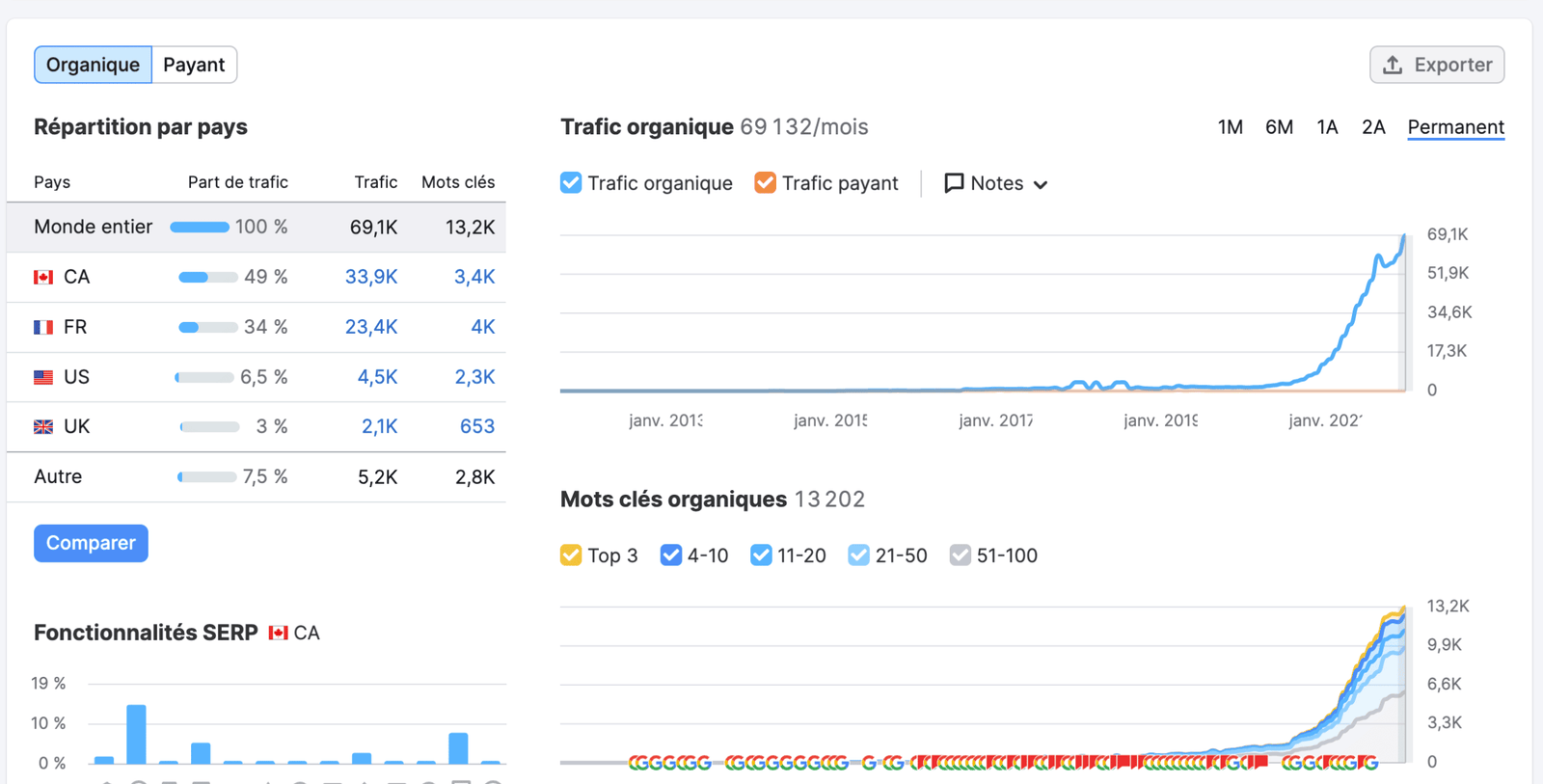
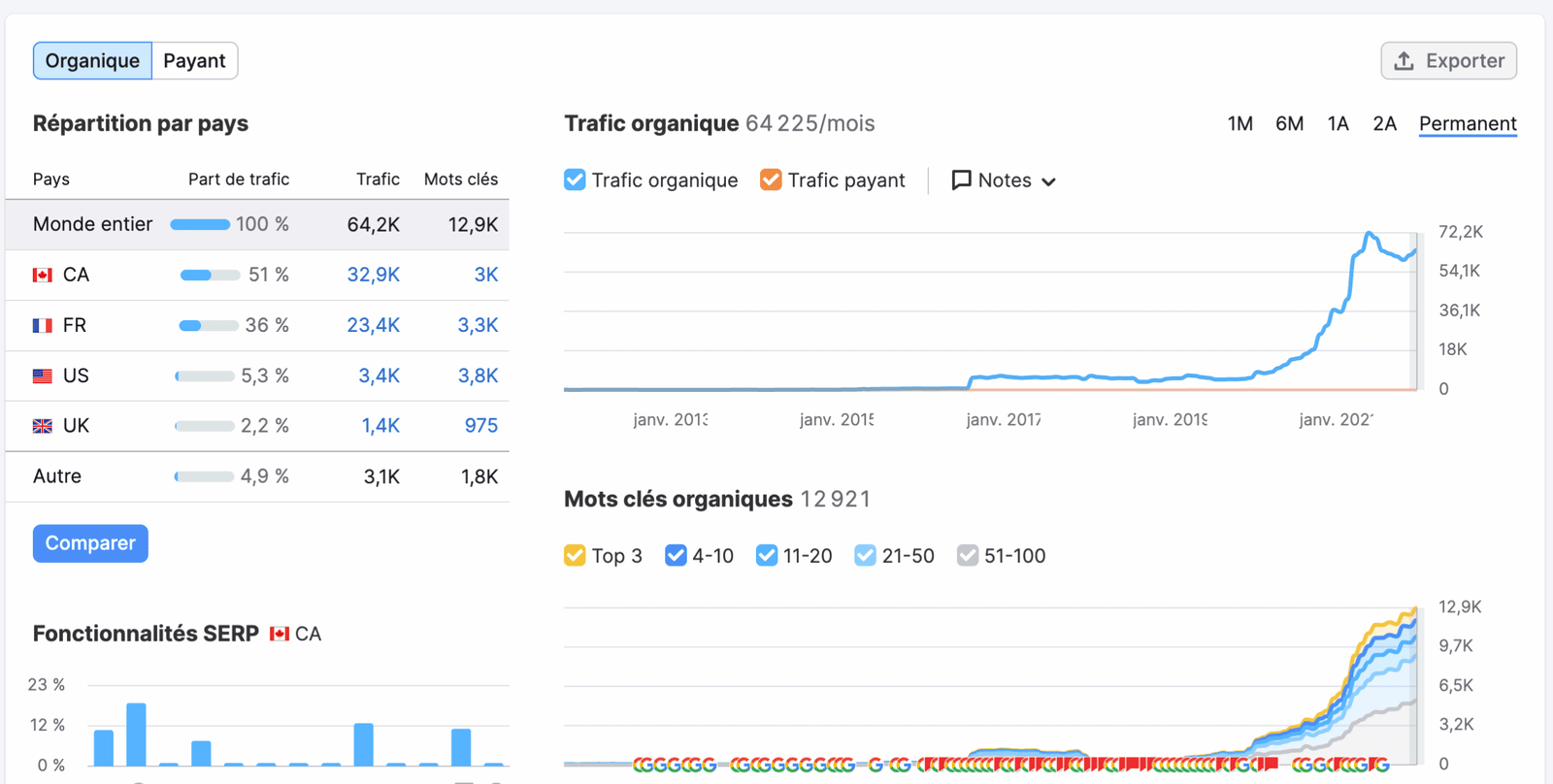
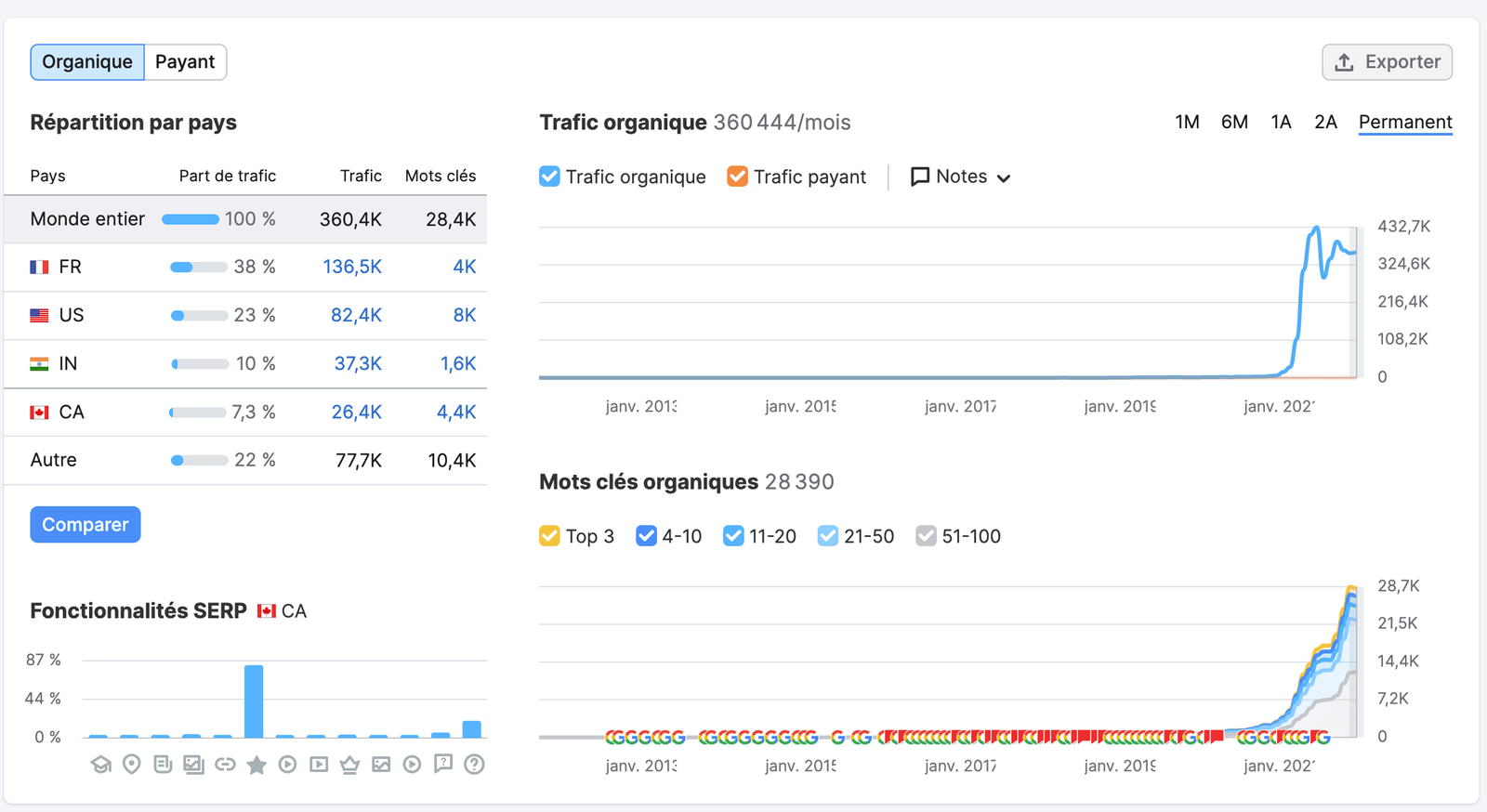
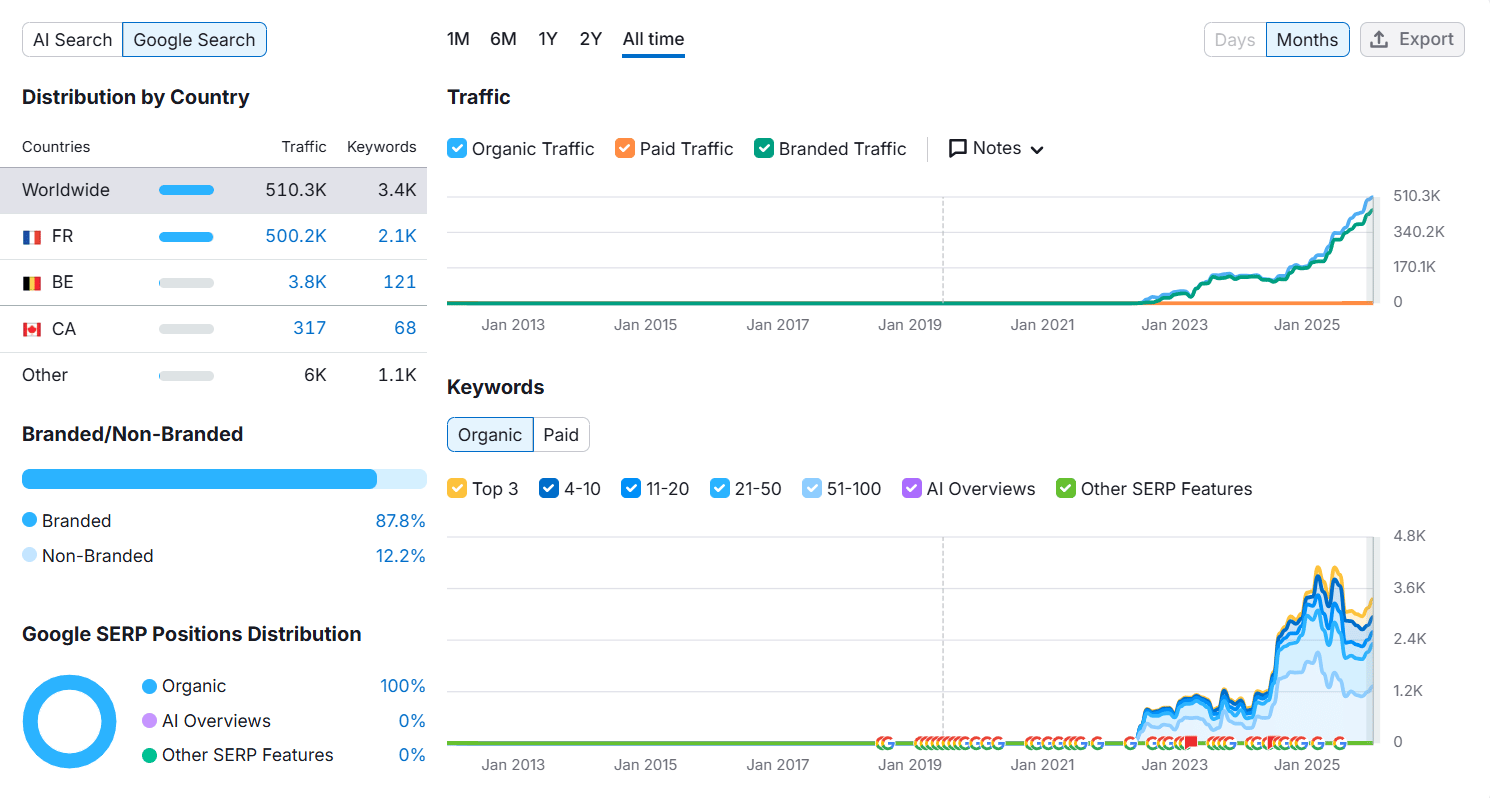
Our employment lawyer SEO services
An employee who was just fired and an HR director drafting a policy type different searches, read different content and contact a law firm at different moments. Our SEO agency in Montreal structures SEO for employment law firms around both paths, on the same foundation our SEO agency for lawyers uses for every firm.
Employee-side pages, one per claim
Wrongful dismissal, constructive dismissal, workplace harassment, discrimination, unpaid wages, severance: we write one landing page per claim, for the person living through it. The landing page answers the first question (“do I have a case?”), gives the filing deadline with a link to the official source, then explains how to book a consultation with an employment lawyer.
Employer-side pages and labor relations
Employers look for labor and employment advice before a dispute: harassment prevention policies, workplace investigations, employment contracts, non-compete clauses, terminations, collective agreements. We write these landing pages for human resources managers and business owners, with calls to action that lead to an advisory engagement. The logic is close to B2B SEO: low search volume, high-value queries.
Legal content on agencies and tribunals
Many employment law searches name a statute or an institution: Quebec’s Act respecting labour standards, the CNESST and the Tribunal administratif du travail, the Canada Industrial Relations Board for federally regulated employers, or the EEOC in the United States. Our blog articles explain the steps of a complaint or a hearing, cite the governing law, describe remedies such as reinstatement in the terms the official sources use and link to the matching practice area page. Each article stays general information about the procedure, not an analysis of a specific case.
The professional conduct rules that apply to a law firm website are the same as in other practice areas, and our lawyer SEO page covers them. In employment law, an example drawn from a real dismissal can be enough to identify an employee in a small workplace, so examples stay generic.
Google Business Profile and local search
Searches like “employment lawyer Montreal” or “wrongful dismissal lawyer near me” are local, so the local SEO side of the mandate targets the local pack. In your Google Business Profile, services are named by claim type, such as wrongful dismissal or harassment, to match the pages on your website. We also help you get Google reviews, without incentives.
AI search visibility for employment questions
An employee may ask ChatGPT or Perplexity “can my employer fire me without cause?” before calling anyone. We build clear practice area pages with schema markup and earn editorial backlinks and guest posts, with no shady practices, which gives the law firm a chance to be cited in the answer, including in Google AI Overviews. This work is part of the mandate and follows the method of our GEO agency.

Ready to grow your employment law practice?
Send us your website: you get a free first review of your SEO opportunities, on the employee side and the employer side.
Everything about employment law SEO
8 min read·By SEO Montreal™
Employment law searches: employees and employers
Employees search in a crisis
Employees often search shortly after being let go, sometimes on mobile, in their own words: “fired for no reason,” “boss harassing me what to do.” Deadlines add urgency: in Quebec, the CNESST says an employee with at least 2 years of service with the same employer has 45 days from the dismissal to file a complaint for dismissal without just and sufficient cause. We build the claim page for site speed and Core Web Vitals, with an answer in a few lines and a visible consultation button: that is where technical SEO serves conversion.
Employers compare and come back
An HR manager reads several articles, returns to the website and compares two or three employment law firms before retaining one. That organic traffic is smaller, but one of these leads can bring several cases. Their searches are more technical: “employer obligations psychological harassment,” “termination for economic reasons,” “harassment policy template.” In Quebec, the CNESST states that every employer must adopt a psychological harassment prevention and complaint-handling policy, and we use it as a natural entry point for employer-side content.
One site, two paths
For a firm that represents both sides, we split the site into two sections, each with its own landing pages and call to action. For a law firm that represents only employees or only employers, we say so at the top of the page, so readers know right away whether they are in the right place. Internal linking follows the same split.
Employment law SEO competition
On informational searches, government pages, legal directories and the publications of large national firms often hold the top rankings. A mid-size employment law firm can instead compete on service searches and long-tail keywords: a precise claim in a city, with a practice area page that answers that intent better than a directory does. We rank keywords by that criterion from the start of the keyword research.
Our employment law SEO method
Pick the side and the claims
We start from your actual practice: the sides you represent (unions included) and the claims that bring in your cases. That decision sets the site architecture before any content is written.
Map searches by claim
We group keywords by claim and by intent, from urgent searches to firm comparisons. Each group gets either a practice area page or a blog article, so two pages never compete for the same query.
Build the claim pages
Our team executes directly on your site, starting with the claims chosen in the first step: each claim page gets its on-page SEO and title tags, then we link it to the blog articles about that claim. Google Ads campaigns, included in the mandate, test which claims bring in consultation requests.
Measure requests by matter type
We follow up with a monthly report or a meeting, whichever you prefer. We look at consultation requests and signed cases by claim, then adjust priorities toward the content that converts.
Employment lawyer SEO pricing
Legal services are a competitive field, so a mandate usually starts around $2,000 to $3,000 per month. The price depends on the scope of the work and the competition, not on a fixed price grid, and Google Ads management is included with no management fee. For a first audit of your website, our guide to SEO audit costs gives benchmarks.
Why choose us for employment law SEO
Based in Montreal, our team has worked with more than 500 clients in over 25 industries and takes on employment law firms across Canada and the United States. The mandate runs month to month with 30 days’ notice, and the work we build stays yours. Every page goes through Google Docs for your approval before it is published. You can reach out to our team for a free 30-minute consultation, with a reply within 24 business hours.
What is employment law SEO?
SEO for employment lawyers is the work that helps a law firm’s website and Business Profile appear when an employee or an employer searches for help with a workplace problem. It is a branch of law firm SEO: the same organic search work, applied to one practice area. It differs from lawyer SEO in general because of its two audiences with opposite intents, the weight of agencies like the CNESST or the EEOC in search results and the filing deadlines that make some searches urgent. For the usual traps, our article on common SEO mistakes is a good starting point.
Employment law SEO FAQ
Yes, as soon as the firm represents both. An employee who was just fired and an employer preparing a termination type different searches and expect different answers. A landing page that speaks to both tends to rank poorly for both kinds of searches and to convert less well. We create one section per audience, with its own claim pages and a call to action toward a consultation, linked internally within that section.
Yes: it is often the first thing employees look for. We state each deadline with a link to the official page. The EEOC, for instance, says a discrimination charge generally has to be filed within 180 calendar days, extended to 300 days where a state or local agency enforces a law against employment discrimination on the same basis. A lawyer at the firm validates every deadline before publication and tells us when the law changes so we can update it.
Mostly by targeting different searches. Agencies like the CNESST or the EEOC answer general information queries well, while a law firm can rank for service searches such as “wrongful dismissal lawyer Toronto” or “harassment lawyer Montreal.” The firm’s blog articles complement the official information by focusing on the decision ahead, such as whether to consult a lawyer before filing a complaint. They cite the agency pages and link to the law firm’s practice area page.
Mostly advisory searches: harassment policies, workplace investigations, non-compete clauses, terminations, collective agreements, union certification. The search volume is low, but each request can turn into recurring work for the firm. We write these pages for a busy HR manager, with the answer at the top and a call to action toward a consultation at the end. Longer articles on the same topics can help build topical authority.
Yes, if the firm advises employees or employers in federally regulated businesses. The Government of Canada says Part III of the Canada Labour Code protects employees from unjust dismissal if they have at least 12 months of continuous employment with the same employer and are not covered by a collective agreement. Unresolved complaints go to the Canada Industrial Relations Board. We then create a separate page to keep the federal and provincial regimes apart in search results.
We write general information: what the law provides, the steps of a complaint, the role of the agency or tribunal, with the official sources linked. The landing page then invites the reader to book a consultation with an employment lawyer about their own situation. It avoids diagnoses like “you are a victim of harassment.” The CNESST, for instance, says a psychological or sexual harassment complaint must be filed within 2 years of the last incident.
Yes, especially on the employer side, where the decision comes after reading several articles. Articles on mediation, layoffs, severance or employer obligations show the firm’s expertise and can attract backlinks. On the employee side, the blog captures the questions people ask before a consultation. Each article links to the practice area page for the related claim, which can pass authority to the pages that convert visitors into clients.
Let’s talk about your employment law firm
Book a free consultation: 30 minutes, no commitment, a reply within 24 business hours.